Judas Iscariot – The Betrayer Who Sold His Lord for Thirty Pieces of Silver
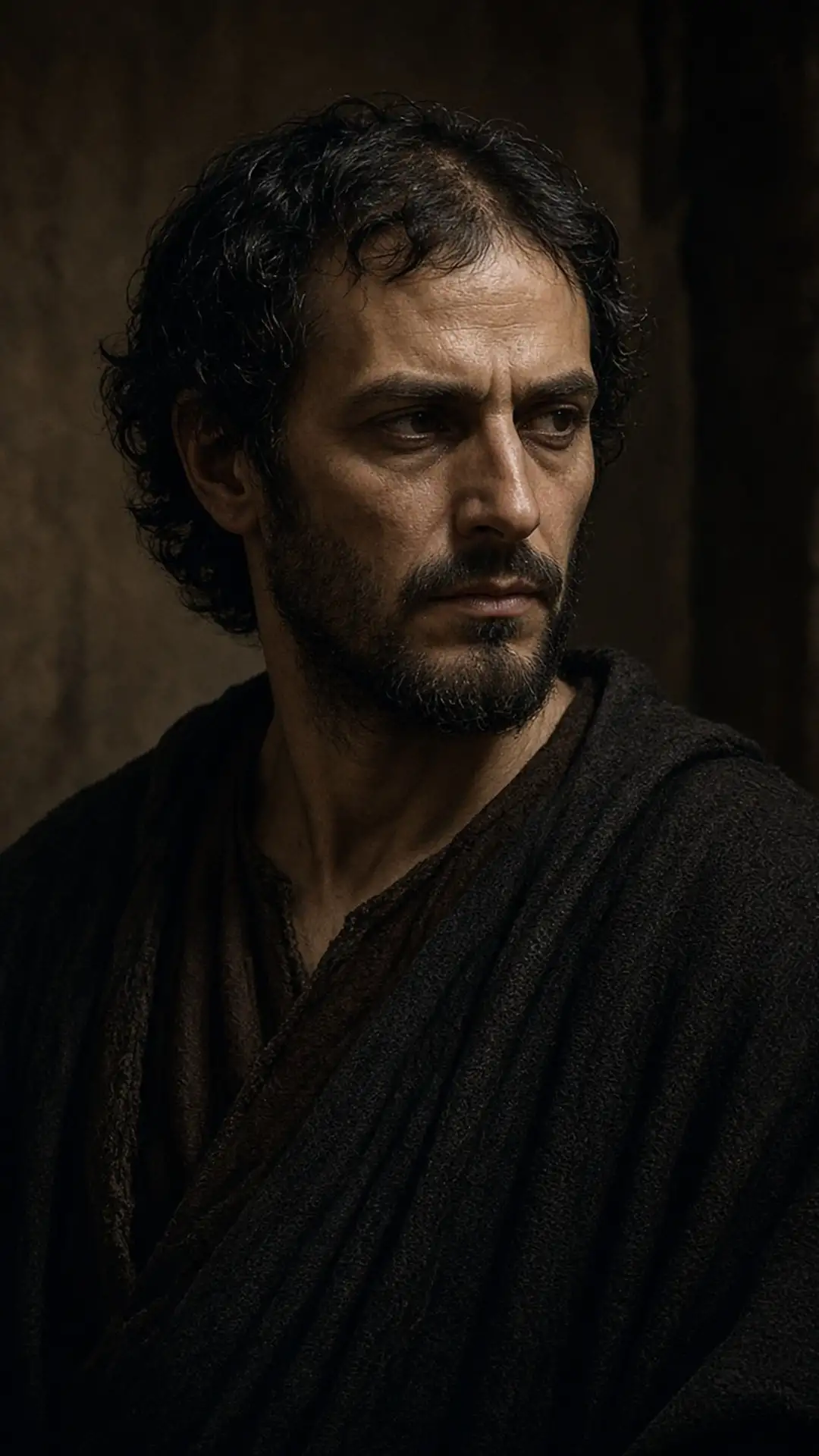
Key Moments in Judas’ Life
Chosen as one of the Twelve (Matt 10:4)
Kept the money bag (John 12:6)
Criticized Mary’s gift (John 12:4–6)
Thirty pieces of silver (Matt 26:14–16)
“Is it I, Rabbi?” (Matt 26:25)
In Gethsemane (Matt 26:47–50)
The Call – Chosen Among the Twelve
Judas Iscariot was one of the twelve apostles chosen by Jesus (Matthew 10:4; Mark 3:19; Luke 6:16). His surname “Iscariot” likely means “man of Kerioth,” a town in southern Judah, making him the only non-Galilean among the Twelve. This distinction may have contributed to his sense of being an outsider.
Judas was entrusted with the group’s money bag and served as treasurer (John 12:6; John 13:29). This role gave him access to the funds donated for the ministry. The Gospels later reveal that he was dishonest and stole from the money bag (John 12:6). Despite this flaw, Jesus chose him and kept him close for three years.
Judas witnessed all the same miracles, teachings, and events as the other apostles. He heard the Sermon on the Mount, saw the feeding of the 5,000, and watched Jesus walk on water. Yet somewhere along the way, his heart turned away from Jesus. His story is a sobering reminder that proximity to Christ does not guarantee true faith.
The Anointing at Bethany – Greed Revealed
At Bethany, Mary anointed Jesus’ feet with very expensive ointment. Judas objected: “Why was not this ointment sold for three hundred pence, and given to the poor?” (John 12:4–6). The text explains his true motive: he was a thief who helped himself to the money bag.
Jesus defended Mary: “Let her alone: against the day of my burying hath she kept this. For the poor always ye have with you; but me ye have not always.” (John 12:7–8). This rebuke may have been a turning point for Judas. His greed was exposed, and Jesus spoke openly of His coming death—something Judas may have refused to accept.
“Then saith one of his disciples, Judas Iscariot, Simon’s son, which should betray him, Why was not this ointment sold for three hundred pence, and given to the poor? This he said, not that he cared for the poor; but because he was a thief, and had the bag, and bare what was put therein.” — John 12:4–6 (AKJV)
The Agreement to Betray – Thirty Pieces of Silver
After the anointing incident, Judas went to the chief priests and asked: “What will ye give me, and I will deliver him unto you?” They covenanted to give him thirty pieces of silver (Matthew 26:14–16; Mark 14:10–11; Luke 22:3–6). This amount was the price of a slave (Exodus 21:32) and fulfilled Zechariah’s prophecy (Zechariah 11:12–13).
Luke records that Satan entered Judas at this time (Luke 22:3). From this point, Judas sought an opportunity to betray Jesus without a crowd present. His motive was likely a mixture of greed, disillusionment, and possibly political frustration—Jesus was not the conquering Messiah he may have expected.
The Last Supper – The Betrayal Foretold
During the Last Supper, Jesus announced that one of the Twelve would betray Him (Matthew 26:21–25; Mark 14:18–21; Luke 22:21–23; John 13:21–30). The disciples were sorrowful and asked, “Lord, is it I?”
Jesus answered: “Thou hast said” when Judas asked, “Master, is it I?” Jesus then gave Judas a sop (piece of bread), and after Judas received it, Satan entered him. Jesus said, “That thou doest, do quickly.” Judas left immediately into the night (John 13:27–30).
This moment shows Judas’ final choice. Even after being directly confronted, he chose betrayal. Jesus knew Judas’ heart and still gave him every opportunity to turn back—yet Judas left to carry out his plan.
The Kiss of Betrayal – In Gethsemane
Judas led a crowd with swords and staves to the Garden of Gethsemane. He had given the authorities a sign: “Whomsoever I shall kiss, that same is he: hold him fast.” He approached Jesus and said, “Hail, master,” and kissed Him (Matthew 26:47–50; Mark 14:43–46; Luke 22:47–48).
Jesus responded: “Friend, wherefore art thou come?” Even in the moment of betrayal, Jesus called Judas “friend.” The kiss, a customary greeting, became the symbol of the greatest treachery in history.
The Remorse & Death of Judas
When Judas saw that Jesus was condemned, he repented and returned the thirty pieces of silver to the chief priests, saying, “I have sinned in that I have betrayed the innocent blood.” They dismissed him: “What is that to us? see thou to that.” Judas cast down the silver in the temple, left, and hanged himself (Matthew 27:3–5).
Acts adds that he purchased a field with the money and fell headlong, bursting open (Acts 1:18–19). The field became known as “the field of blood” (Acts 1:19). Judas’ remorse was real but led to despair rather than repentance. He never sought forgiveness from Jesus.
Death & Legacy
Judas Iscariot’s death was tragic and self-inflicted. He hanged himself after returning the blood money (Matthew 27:5). His betrayal fulfilled Scripture (Psalm 41:9; Psalm 109:8; Zechariah 11:12–13) and made way for Matthias to be chosen as the twelfth apostle (Acts 1:15–26).
Judas’ legacy is a warning. He walked with Jesus for three years, saw miracles, heard teachings, and still chose betrayal for thirty pieces of silver. His story shows that external closeness to Christ does not guarantee a changed heart. Judas reminds us of the danger of greed, disillusionment, and unrepented sin. Yet his failure also highlights the grace of God—the betrayal led to the cross, through which salvation came to the world. Judas’ tragedy stands in contrast to the faithfulness of the other apostles, underscoring the choice every disciple must make.