Matthias – The Apostle Chosen by Lot to Replace Judas
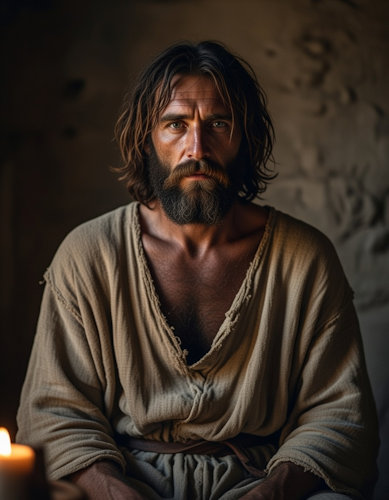
Key Moments in Matthias’ Life
With Jesus from baptism to ascension (Acts 1:21–22)
Chosen by lot to replace Judas (Acts 1:23–26)
Received the Holy Spirit (Acts 2:1–4)
Eyewitness of resurrection ministry (Acts 1:22)
The apostle who completed the Twelve
Before the Lot – A Disciple from the Beginning
Matthias was not one of the original twelve chosen by Jesus during His earthly ministry. Yet he was among the larger group of disciples who had been with Jesus “beginning from the baptism of John, unto that same day that he was taken up” (Acts 1:21–22). Peter’s criteria for the replacement apostle were clear: the man must have been an eyewitness of Jesus’ entire ministry and especially of the resurrection appearances.
Matthias met this requirement. He had seen the miracles, heard the teachings, watched the crucifixion (whether from afar or near), and — most importantly — had encountered the risen Christ. Tradition suggests he may have been among the seventy (or seventy-two) disciples sent out by Jesus (Luke 10:1), though Scripture does not name him explicitly. His long faithfulness qualified him to stand with the Eleven.
Two candidates were put forward: Joseph called Barsabbas (Justus) and Matthias (Acts 1:23). Both were qualified, both faithful, both eyewitnesses. The church prayed earnestly for guidance and cast lots — an Old Testament method of discerning God’s will (Proverbs 16:33). The lot fell on Matthias, and “he was numbered with the eleven apostles” (Acts 1:26).
The Lot Falls – Restoring the Twelve
Peter explained why a replacement was necessary: Judas had fallen away, and Scripture foretold that another must take his place (Psalm 69:25; Psalm 109:8). The number twelve carried deep symbolic weight — representing the twelve tribes of Israel and the renewed people of God. With Judas gone, the apostles were eleven. The church acted swiftly to restore the full number before the outpouring of the Spirit at Pentecost.
They prayed earnestly: “Thou, Lord, which knowest the hearts of all men, shew whether of these two thou hast chosen, that he may take part of this ministry and apostleship…” Then they cast lots, and the lot fell upon Matthias (Acts 1:26). From that moment, he was numbered with the apostles — equal in authority, equal in mission, equal in witness to the resurrection.
“And they gave forth their lots; and the lot fell upon Matthias; and he was numbered with the eleven apostles.” — Acts 1:26 (AKJV)
Pentecost & the Early Church
Matthias was present in the upper room when the Holy Spirit descended at Pentecost (Acts 2:1–4). He heard Peter’s powerful sermon, saw 3,000 people repent and be baptized, and became part of the foundational leadership of the church in Jerusalem during its earliest, most explosive days.
After Pentecost, Matthias disappears from the biblical record. He is not named again in Acts or the epistles. This silence has led some to speculate that he played a quieter role, perhaps ministering in Judea or among Jewish communities while Peter, John, and later Paul took more visible leadership positions. His absence from later narratives does not diminish his role — he was one of the Twelve, a witness to the resurrection, and a foundational stone in the church.
Ministry & Martyrdom Traditions
Scripture gives no details of Matthias’s later ministry or travels. Early church tradition is sparse and sometimes contradictory. Some sources say he preached in Judea, others in Cappadocia, Ethiopia, or Colchis (modern Georgia). One tradition claims he remained in Jerusalem as part of the early leadership alongside the other apostles.
Martyrdom accounts also vary widely: some say he was stoned and then beheaded in Jerusalem; others place his death in Colchis by crucifixion or stoning. A minority tradition holds that he died peacefully in old age. The lack of a single, unified account reflects Matthias’s relatively obscure role in early Christian memory — he was faithful, but not famous; foundational, but not spotlighted.
Death & Legacy
Matthias is traditionally believed to have died as a martyr — most commonly stoned and beheaded in Jerusalem around AD 80, though some traditions place his death in Colchis or suggest a natural passing. His relics are claimed by various churches, including Trier in Germany (where the “Holy Robe” legend is sometimes linked to him) and St. Matthias Abbey.
Matthias’s legacy is unique among the apostles: he was not chosen directly by Jesus during His earthly ministry, yet he was numbered with the Twelve through prayer, Scripture, and divine guidance. His story reminds us that apostleship was not only about personal encounter with the historical Jesus but also about faithful witness to the resurrection. Matthias was a “witness with us of his resurrection” (Acts 1:22), and that calling defined his life.
He stands as a symbol of continuity, restoration, and grace — the man God used to complete the Twelve after betrayal. In a church built on imperfect people, Matthias shows that even when one falls, God raises up another to stand in the gap. His quiet entry into the Twelve and silent exit from the record remind us that not every calling is public, but every faithful witness matters in the kingdom.