Philip – The Apostle Who Brought Others to Jesus
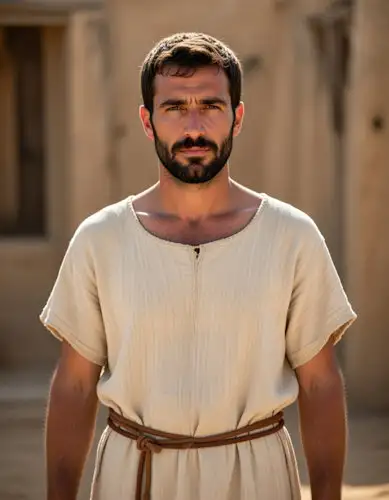
Key Moments in Philip’s Life
“Follow me” – brought Nathanael (John 1:43–46)
Practical question about bread (John 6:5–7)
Told Andrew – brought them to Jesus (John 12:20–22)
“Lord, show us the Father” (John 14:8–9)
Present in the upper room (Acts 1:13)
Preached in Asia Minor & died in Hierapolis
The Call – “Come and See”
Philip was from Bethsaida, the same town as Peter and Andrew (John 1:44). Jesus found him and simply said: “Follow me” (John 1:43). Philip obeyed immediately.
His first recorded action as a disciple was to find Nathanael (Bartholomew) and tell him: “We have found him, of whom Moses in the law, and the prophets, did write, Jesus of Nazareth, the son of Joseph.” When Nathanael was skeptical, Philip replied with the famous invitation: “Come and see” (John 1:45–46). This simple phrase captures Philip’s character — he didn’t argue theology; he brought people to Jesus so they could meet Him personally.
Philip’s early response shows he recognized Jesus as the Messiah very quickly. He was eager to share the discovery with others. This evangelistic instinct appears repeatedly in his story.
Feeding the 5,000 – Practical Faith
When a huge crowd followed Jesus near the Sea of Galilee, Jesus asked Philip: “Whence shall we buy bread, that these may eat?” (John 6:5–7). Philip answered realistically: “Two hundred pennyworth of bread is not sufficient for them, that every one of them may take a little.”
Philip’s answer shows his practical, down-to-earth nature. He immediately calculated the cost and saw the impossibility. Yet this question set the stage for one of Jesus’ greatest miracles — the feeding of the 5,000. Philip’s realism made the miracle even more astonishing. Jesus used the situation to teach faith beyond human calculation.
“Philip answered him, Two hundred pennyworth of bread is not sufficient for them, that every one of them may take a little.” — John 6:7 (AKJV)
The Greeks Who Sought Jesus
During the final week in Jerusalem, some Greeks came to worship at the feast and approached Philip with the request: “Sir, we would see Jesus.” Philip went and told Andrew, and together they told Jesus (John 12:20–22).
This incident is significant: Philip was the bridge between the Greek-speaking world and Jesus. His name (Philippos) is Greek, not Hebrew, which may explain why the Greeks felt comfortable approaching him. Once again, Philip’s instinct was to bring people to Jesus — this time foreigners who would help spread the gospel beyond Israel.
Jesus responded by speaking of His coming death: “The hour is come, that the Son of man should be glorified.” The arrival of these Greeks signaled that the gospel was now going to the whole world — a mission Philip would later help fulfill.
“Show Us the Father” – A Request for Revelation
At the Last Supper, Jesus spoke of seeing the Father. Philip said: “Lord, show us the Father, and it sufficeth us.” Jesus replied: “Have I been so long time with you, and yet hast thou not known me, Philip? he that hath seen me hath seen the Father…” (John 14:8–9).
Philip’s request was sincere — he longed to see God. Jesus gently corrected him, revealing that He Himself is the full revelation of the Father. This exchange shows Philip’s hunger for spiritual understanding and Jesus’ patience in teaching His disciples.
Philip’s Ministry & Later Life
After the resurrection and ascension, Philip is mentioned among the apostles in the upper room (Acts 1:13). Early church tradition (Clement of Alexandria, Polycrates of Ephesus) says Philip preached in Asia Minor (modern Turkey), particularly in Hierapolis, where he performed miracles and brought many to faith.
Tradition also holds that Philip was martyred in Hierapolis — either crucified upside down or beheaded — around AD 80. His daughters were known as prophetesses in the early church. Philip’s ministry was marked by bringing people to Jesus, just as he had done from the beginning.
Death & Legacy
Philip is traditionally believed to have been martyred in Hierapolis after a long ministry of preaching and miracles. His death was a testimony to his faithfulness — he brought others to Jesus until the end.
Philip’s legacy is that of a quiet but effective evangelist. He never sought the spotlight; his greatest gift was saying “Come and see” and bringing people directly to Jesus. Whether it was Nathanael, the Greeks, or the crowds in Asia Minor, Philip’s ministry was about introduction, not self-promotion. His story encourages every believer that simple faithfulness — pointing others to Christ — is powerful. In a world full of noise, Philip reminds us that quiet, sincere witness can change lives forever.