Dying Well: The Quiet Strength of a Christian Man
The Final Testimony of a Faithful Life
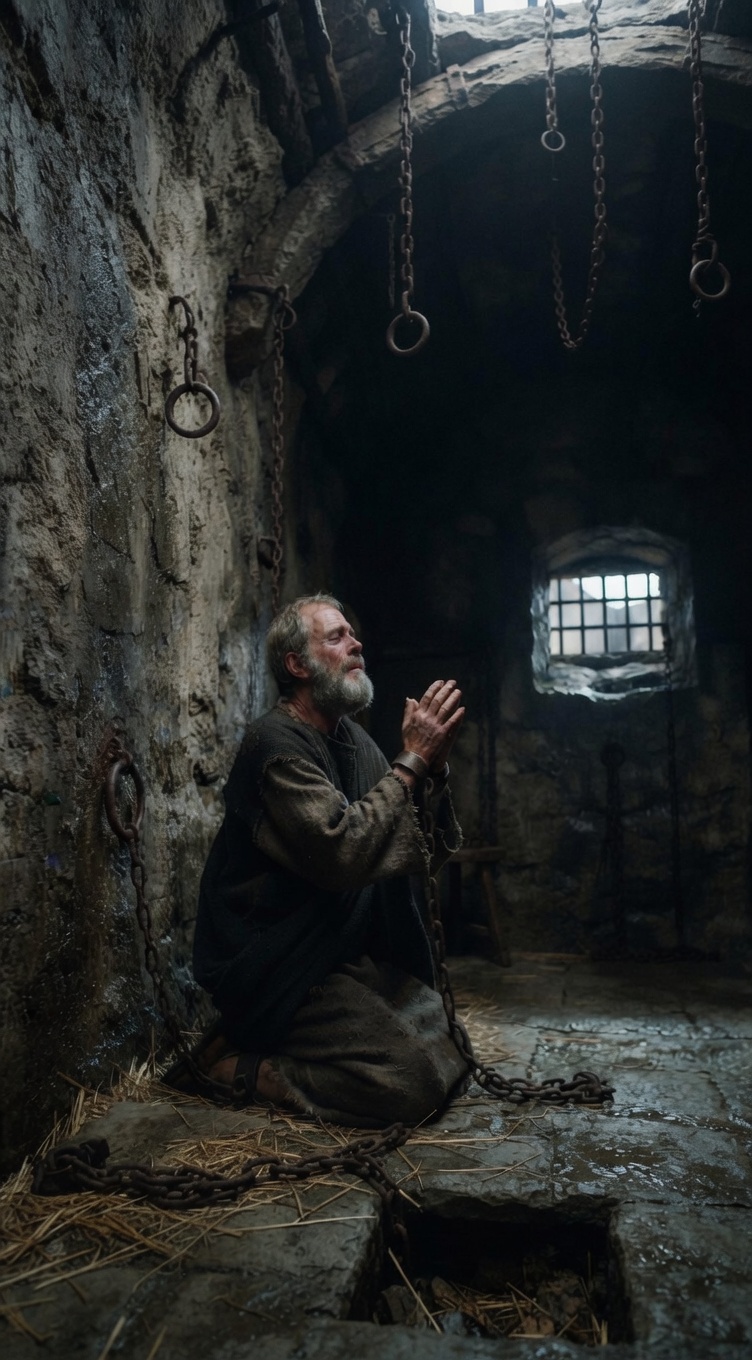 Every man will one day face the reality of his own death. For the world, death is the ultimate enemy — the end of all striving, the silence after every achievement, the separation from everything loved. But for a man who belongs to Jesus Christ, death is something entirely different. It is not the end of the story. It is the doorway into the presence of the One he has loved and served all his life.
A Christian man does not die in despair or fear. He dies with hope, with peace, and with a testimony that continues to speak long after his last breath. His death becomes one of the most powerful sermons he ever preaches — not with words, but with the quiet confidence that Christ has conquered the grave. The way he faces that final hour reveals what he truly believed all along.
“For to me, to live is Christ and to die is gain.” — Philippians 1:21 (WEB)
The Biblical View of Death for the Believer
Scripture never treats death as a friend, but for the Christian it has lost its sting. The apostle Paul declared that death is the last enemy to be destroyed (1 Corinthians 15:26), yet he also said that to die is gain because it means being with Christ, which is “better by far” (Philippians 1:23). The difference is not in the pain or the sorrow of separation — those remain real — but in the certain hope that lies beyond the grave.
Jesus Himself wept at the tomb of Lazarus even though He knew He would raise him. He felt the weight of death’s sorrow. Yet He also said, “I am the resurrection and the life. The one who believes in me will live, even though they die” (John 11:25). For the man who has trusted in Christ, death is not a leap into darkness. It is a step into the arms of the Savior he has known and loved.
This is why a Christian man can face death differently. He does not need to pretend it does not hurt. He does not need to hide his weakness. He can be honest about the valley of the shadow while still walking through it with the Good Shepherd who has already walked it before him.
Men Who Died Well in Scripture
The Bible gives us many examples of men who faced death with faith. Jacob, on his deathbed, gathered his sons, blessed them, and prophesied over their futures. He did not die clutching his possessions — he died pointing his family to the God of Abraham and Isaac. Joseph, before he died, made his brothers promise to carry his bones out of Egypt when God fulfilled His promise. Even in death he was looking forward to the faithfulness of God.
King David, after a long and often turbulent life, charged his son Solomon to walk in the ways of the Lord and to build the temple. His final words were not about his own achievements but about passing on the fear of the Lord to the next generation. Stephen, the first martyr, looked up into heaven as he was being stoned and saw Jesus standing at the right hand of God. His last words were a prayer of forgiveness for his killers.
The apostle Paul, writing from prison and knowing his execution was near, could say with quiet confidence, “I have fought the good fight, I have finished the race, I have kept the faith. Now there is in store for me the crown of righteousness” (2 Timothy 4:7-8). These men did not die perfectly, but they died pointing to Christ. Their deaths became part of their legacy of faith.
What It Means to Die Well as a Christian Man
To die well does not mean dying without pain or sorrow. It means dying with faith intact, with peace in the heart, and with a clear testimony to those left behind. A Christian man who dies well leaves his wife, his children, and his grandchildren with more than memories — he leaves them with a living example of what it looks like to trust Christ to the very end.
It means being able to say, even in weakness, “I am ready.” It means using his final days, weeks, or hours to speak blessing, to ask forgiveness where needed, to express love, and to point his family to the only hope that will sustain them when he is gone. It means refusing to let fear or bitterness have the last word.
Above all, it means resting in the finished work of Jesus. A man who has lived by grace can die by grace. He does not need to earn his way into heaven in his final moments. He simply clings to the One who has already paid the price and who has promised, “Today you will be with me in paradise” (Luke 23:43).
A Beautiful Expression of Ready Faith
One of the most moving expressions of a Christian man’s heart as he faces death comes in these words. They capture the quiet surrender, the humble trust, and the eager hope that mark a life ready to meet the Lord:
Whether I die or if I live;
To love and serve thee is my share,
And this thy grace must give.
If life be long, I will be glad
That I may long obey;
If short, yet why should I be sad
To soar to endless day?
Christ leads me through no darker rooms
Than he went through before;
He that unto God’s kingdom comes
Must enter by this door.
Come, Lord, when grace has made me meet
Thy blessed face to see;
For if thy work on earth be sweet,
What will thy glory be?
Then I shall end my sad complaints
And weary sinful days,
And join with the triumphant saints
Who sing my Saviour’s praise.
My knowledge of that life is small,
The eye of faith is dim;
But it’s enough that Christ knows all,
And I shall be with him.
These words do not come from a place of perfect strength. They come from a place of deep dependence. They acknowledge that the length of life is not ours to decide, but that every day — whether many or few — belongs to the Lord. They confess that the same Christ who walked through suffering and death has gone before us, and that the door into God’s kingdom is the door He Himself opened.
The Heart Behind Each Line
The opening stanza surrenders the question of timing entirely to God. Whether life is long or short, the only thing that matters is loving and serving the Lord — and even that is a gift of grace. There is no striving to earn more time or to control the outcome. There is only trust.
The second stanza refuses to let sadness steal the joy of either possibility. A long life means more years to obey. A short life means sooner entering the endless day of heaven. Both are good because both are under the hand of a good God.
The third stanza looks to Christ as the forerunner. No room is darker than the one He has already walked through. The cross was darker than any deathbed. Because He entered by that door, we can follow without fear.
The fourth stanza longs for the day when faith becomes sight. If serving Christ on earth is sweet, how much sweeter will it be to see His face? The prayer is not for escape from suffering only, but for the full reward of being with the Lord.
The fifth stanza anticipates the end of all complaint and weariness. The struggles of this life will give way to the songs of the saints around the throne. Death is not silence — it is the beginning of eternal praise.
The final stanza is perhaps the most honest. Our knowledge of heaven is small. Our faith sometimes feels dim. But it is enough that Christ knows all, and that we will be with Him. That is the anchor when everything else feels uncertain.
The Legacy a Christian Man Leaves
 When a Christian man dies well, he leaves more than an inheritance of money or property. He leaves a deposit of faith in the hearts of those who watched him. His wife sees a husband who trusted Christ to the end. His children see a father whose hope did not fail when strength failed. His grandchildren see a grandfather who spoke of heaven as a real place and of Jesus as a real Savior.
This kind of legacy cannot be faked in the final hours. It is built over a lifetime of walking with God in the ordinary days. The man who has practiced trusting Christ in small trials will find grace to trust Him in the greatest trial. The man who has spoken of heaven often will find it natural to speak of it when his own departure draws near.
Death has a way of stripping away pretense. In those final days, what a man truly believes becomes visible. When that belief is Christ, it becomes a powerful witness that can shape generations after him.
Living Today in Light of That Day
The call is not only to die well but to live in such a way that dying well becomes possible. That means keeping short accounts with God and with people. It means cultivating a heart that is ready at any moment to say, “Come, Lord.” It means teaching our families now what it looks like to trust Christ in both life and death.
No man knows the day or the hour. Some will have time to speak final words of blessing. Others will be taken suddenly. Either way, the preparation is the same: a life lived in daily dependence on the grace of God. The man who has walked with Christ in the light will not be surprised by the darkness of the valley, because he will know the One who walks with him.
One day, every Christian man will lay down his sword. The question is not whether we will die, but how we will die — and what testimony we will leave behind. May it be said of us that we fought the good fight, finished the race, and kept the faith, all the way to the end.