Give Thanks to the Lord: From Harvest Feasts to a National Day
A Pattern Older Than Any Nation
 Long before any American colony set a table of thanks, the people of God were commanded to remember the source of every harvest. The Lord told Israel, “You shall keep the Feast of Harvest, of the firstfruits of your labor, of what you sow in the field” and “the Feast of Ingathering at the end of the year, when you have gathered in from the field the fruit of your labor” (Exodus 23:16 WEB). These were not mere cultural customs. They were appointed times to acknowledge that the land yields its increase only because the Lord waters it and blesses it.
The psalms give voice to that acknowledgment. “The earth has yielded its increase. God, our own God, will bless us” (Psalm 67:6 WEB). Another song declares, “You visit the earth, and water it. You greatly enrich it. The river of God is full of water. You provide them grain, for so you have ordained it” (Psalm 65:9 WEB). Thanksgiving is not first a feeling. It is the fitting response of creatures who know that every good gift comes from the Father of lights.
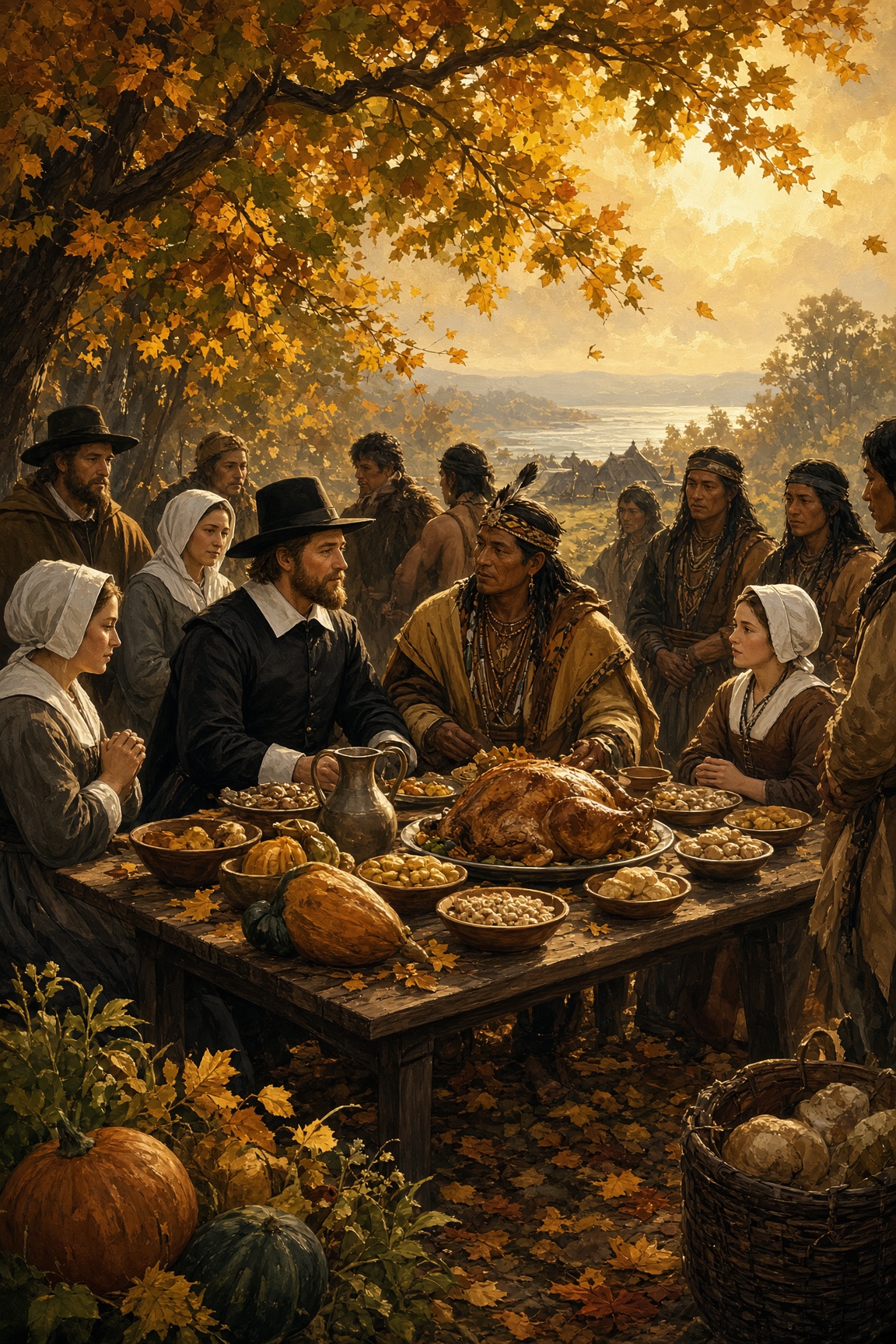
When the English Separatists who became known as the Pilgrims gathered in 1621 after their first successful harvest in the New World, they stood in that long biblical stream. They had suffered a hard first winter. Roughly half their number had died. The surviving company, with the help of the Wampanoag people, had planted and reaped. They set aside days for feasting, games, and giving thanks. The occasion was not the invention of a new holiday. It was one more expression of a people who had learned from Scripture that the Lord is the giver of rain, seed, and bread.
“Give thanks to the LORD, for he is good, for his loving kindness endures forever.” — Psalm 136:1 (WEB)
From Local Days to a National Call
For more than two centuries after that 1621 gathering, days of thanksgiving remained largely local or regional. Colonies and later states appointed special days in response to particular mercies: the end of a drought, a military victory, or a bountiful harvest. George Washington issued the first presidential proclamation for a national day of thanksgiving in 1789. Other early presidents followed from time to time. Yet the practice was never fixed on one annual date for the whole country. Some leaders, notably Thomas Jefferson, declined to issue such proclamations, believing that public religious observances belonged to the states rather than the federal government.
Into that long season of scattered observances stepped Sarah Josepha Hale. As editor of Godey’s Lady’s Book she spent more than thirty years urging a single national day of thanksgiving. She wrote editorials, published recipes that shaped the familiar feast, and sent letters to governors and to successive presidents. She believed a common day of gratitude could strengthen the bonds of the Union. Her campaign continued through the growing sectional crisis. In September 1863, with the nation torn by civil war, she wrote directly to President Abraham Lincoln. She asked that the last Thursday in November be made a fixed national festival of thanksgiving.
“Enter into his gates with thanksgiving, into his courts with praise. Give thanks to him, and bless his name. For the LORD is good. His loving kindness endures forever, his faithfulness to all generations.” — Psalm 100:4-5 (WEB)
Lincoln’s Proclamation in the Midst of War
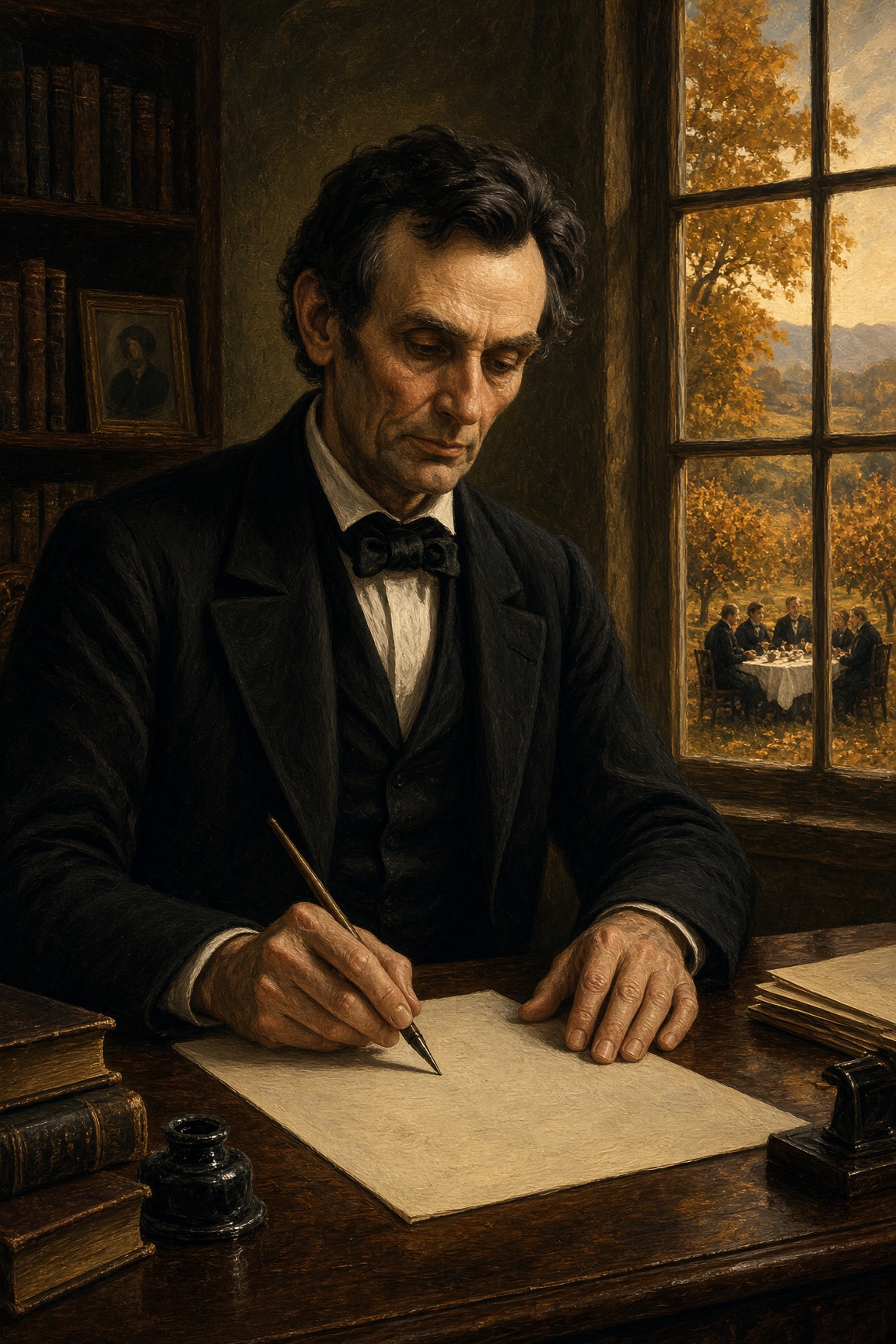 On October 3, 1863, Lincoln issued the proclamation that established the annual national Thanksgiving. The text, largely prepared by Secretary of State William Seward, acknowledged the hard realities of the war while still pointing to the Lord’s mercies. It noted that the year had been filled with the blessings of fruitful fields and healthful skies. Even in the midst of a civil war of unequaled magnitude, the proclamation observed that peace had been preserved with foreign nations, order had been maintained, and the armies of the Union had advanced. No human counsel had devised these things. They were the gracious gifts of the Most High God, who, while dealing with the nation in anger for its sins, had nevertheless remembered mercy.
Lincoln therefore invited his fellow citizens in every part of the United States to set apart and observe the last Thursday of November as a day of thanksgiving and praise to our beneficent Father who dwells in the heavens. He recommended that, while offering the thanks justly due to God, the people also humble themselves for national perverseness and disobedience, commend to the Lord’s tender care all widows, orphans, mourners, and sufferers, and fervently implore the Almighty hand to heal the wounds of the nation and restore it to peace, harmony, and union.
The timing was deliberate. The proclamation came after the costly Union victory at Gettysburg and the fall of Vicksburg. It did not pretend the war was over. It did not claim the nation had earned the Lord’s favor. It simply recognized that the source of every remaining blessing is God, and that a divided people still had reason to give thanks and to seek His healing. From that year forward, every president has issued an annual Thanksgiving proclamation. In 1941 Congress fixed the date as the fourth Thursday in November.
“In everything give thanks, for this is the will of God in Christ Jesus toward you.” — 1 Thessalonians 5:18 (WEB)
Giving Thanks in Every Circumstance
Lincoln’s call to give thanks in the middle of civil strife echoes a New Testament command that is both simple and searching. Paul wrote, “In everything give thanks, for this is the will of God in Christ Jesus toward you” (1 Thessalonians 5:18 WEB). The instruction is not to give thanks for every evil thing, but to give thanks in every circumstance, because the God who rules all things is good and His purposes stand. The same apostle who suffered beatings, shipwrecks, and imprisonment still wrote, “I am not saying this because I am in need, for I have learned to be content whatever the circumstances” (Philippians 4:11 WEB). Contentment and thanksgiving grow from the same root: trust that the Lord is at work even when the path is dark.
The biblical pattern of thanksgiving is therefore broader than a single autumn meal. It includes the ordinary table and the extraordinary deliverance. It includes the quiet gift of daily bread and the public call for a nation to remember its Maker. It includes the thank offering of the old covenant and the continuous sacrifice of praise that belongs to the new: “Through him, then, let us offer up a sacrifice of praise to God continually, that is, the fruit of lips which proclaim allegiance to his name” (Hebrews 13:15 WEB). The meal on the table is a reminder. The greater gift is the One who gives both the meal and the mercy that makes thankfulness possible.
“Through him, then, let us offer up a sacrifice of praise to God continually, that is, the fruit of lips which proclaim allegiance to his name.” — Hebrews 13:15 (WEB)
A Day That Still Points Beyond Itself
The American Thanksgiving that began as a local harvest gathering and became a national day through Hale’s long campaign and Lincoln’s wartime proclamation still carries the biblical shape of gratitude. It is a day when families gather around tables, when the ordinary gifts of food and fellowship are recognized as gifts, and when a nation is invited to look beyond its own strength. The history is real: the 1621 feast at Plymouth, the scattered colonial and state observances, Washington’s early proclamations, Hale’s decades of writing and letters, and Lincoln’s October 1863 call in the midst of civil war. Yet the deeper story is older still. It is the story of a people taught by Scripture to say, “Give thanks to the LORD, for he is good.”
Lincoln’s proclamation did not create the duty of thanksgiving. It simply called a wounded nation to do what the psalms had already taught: to acknowledge the Source of fruitful fields and healthful skies, to confess national sins, and to seek the healing hand of God. That call remains. Whether the table is abundant or sparse, whether the year has been marked by peace or by strife, the fitting response of those who know the Lord is still the same. Enter His gates with thanksgiving. Bless His name. For the Lord is good, and His loving kindness endures forever.
The Gift and the Giver
From the Feast of Ingathering to the tables of Plymouth, from the pages of Godey’s Lady’s Book to the White House in 1863, the thread is the same. Thanksgiving is the recognition that we are not our own providers. The earth yields its increase because the Lord visits it. A nation is preserved or wounded according to His purposes. Families gather because He has given breath and bread. The holiday that Lincoln helped establish is a good and fitting custom. It becomes even more so when those who observe it remember the One to whom the thanks are due.
The psalmist wrote, “What shall I render to the LORD for all his benefits toward me? I will take the cup of salvation, and call on the name of the LORD” (Psalm 116:12-13 WEB). On a day set apart for gratitude, the greatest thanksgiving is still the one that looks to the Giver of every good gift and to the Savior who is the greatest gift of all. The harvest is His. The history is under His hand. The fitting response, in plenty and in want, in peace and in strife, remains the same: Give thanks to the Lord, for He is good.