In the Name of the Most Holy Trinity: How America Was Founded as a Christian Nation
The Document That Officially Made America a Nation
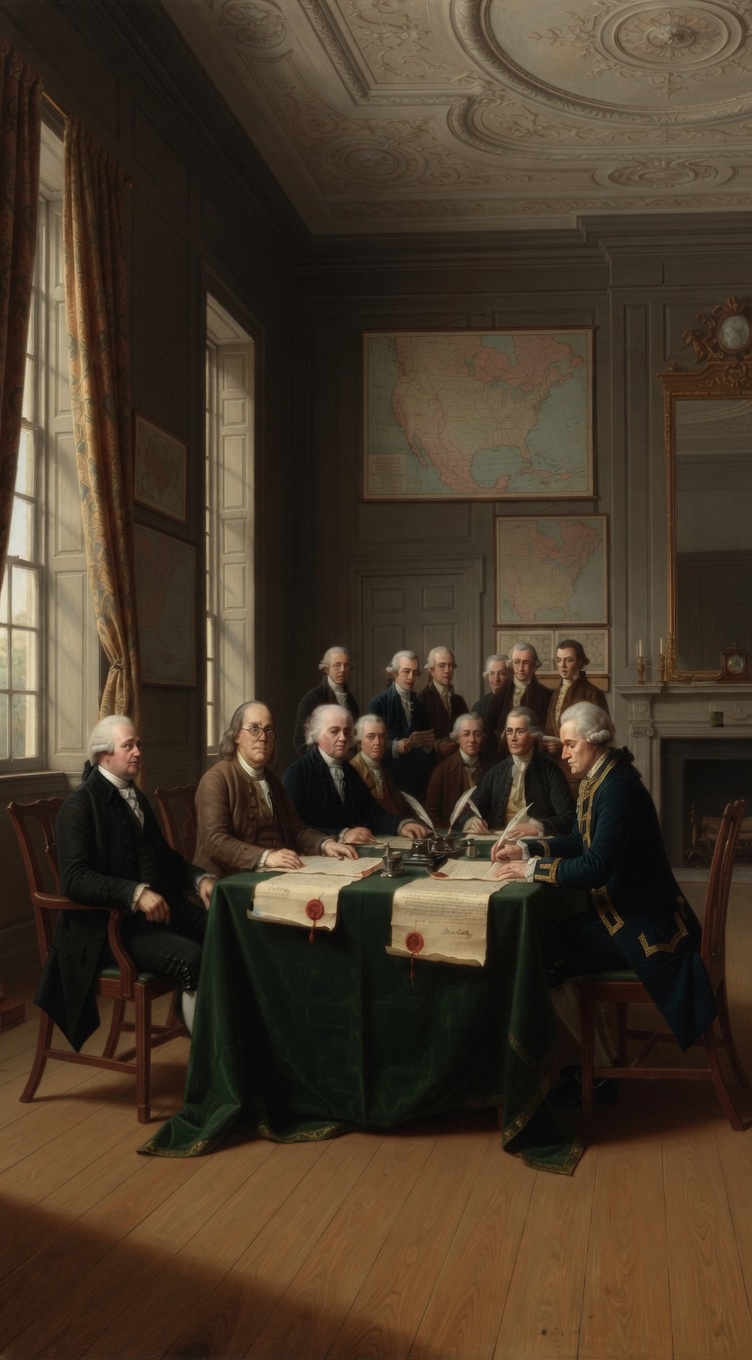 On September 3, 1783, in Paris, representatives of the United States and Great Britain signed the definitive Treaty of Peace that ended the American Revolutionary War. This was not merely a ceasefire. This was the legal document by which Great Britain formally recognized the United States of America as a free, sovereign, and independent nation. The men who signed on behalf of America were John Adams, Benjamin Franklin, and John Jay.
Before any articles of the treaty were listed, before any boundaries were described, before any trade agreements were made, the document opened with these words: “In the name of the most holy and undivided Trinity.”
This was the birth certificate of the United States. The very paper that declared America a nation began by invoking the Father, the Son, and the Holy Spirit. Those who claim America was founded as a secular or godless nation must answer a simple question: What document are they reading? The one that actually made us a nation begins by acknowledging the triune God of Scripture.
“In the name of the most holy and undivided Trinity. It having pleased the Divine Providence to dispose the hearts of the most serene and most potent Prince George the Third... and of the United States of America, to forget all past misunderstandings and differences... and to establish such a beneficial and satisfactory intercourse between the two countries... as may promote and secure to both perpetual peace and harmony.” — The Definitive Treaty of Peace, Paris, September 3, 1783
A Pattern Established from the Beginning
The invocation of the Trinity in the Treaty of Paris was not an isolated or accidental phrase. It was consistent with the worldview that shaped the entire American founding. From the very first permanent English settlement at Jamestown in 1607, through the Pilgrims’ landing at Plymouth in 1620, and across the thirteen colonies, the men and women who built this land did so with an explicit Christian purpose.
The Mayflower Compact, signed before the Pilgrims even stepped off their ship, declared that they had undertaken the voyage “for the Glory of God, and advancement of the Christian faith.” The early colonial charters and state constitutions repeatedly acknowledged God as the source of law and liberty. Days of fasting, prayer, and thanksgiving were regularly proclaimed by colonial and later state governments. The Bible was the most common textbook in early American schools, and the Ten Commandments hung in many courthouses.
When the Continental Congress met for the first time in 1774, its very first official act was to open with prayer. The famous painting of that Congress shows the delegates on their knees before God. These were not secular men conducting a secular revolution. They were men who believed that if God was not part of the story, they would never succeed.
The Declaration of Independence: Rights from the Creator
Thirteen years before the Treaty of Paris, the Declaration of Independence laid the philosophical foundation for American liberty. Its most famous lines declare that all men “are endowed by their Creator with certain unalienable Rights.” The signers did not appeal to the British crown or to abstract philosophy alone. They appealed to the Creator — the God of the Bible — as the source of human rights and dignity.
Throughout the document they refer to “Nature’s God,” “the Supreme Judge of the world,” and “Divine Providence.” These were not empty religious phrases. They reflected the deep conviction that rights do not come from government and therefore cannot be taken away by government. They come from the Creator, and governments exist to secure what God has already given.
This is why the American experiment in ordered liberty was possible. The founders understood that if rights are merely granted by the state, the state can revoke them. But if rights come from the Creator, they are secure because they are grounded in something higher than any human authority.
The Constitution and the Biblical Worldview
The United States Constitution, while deliberately avoiding the establishment of a national church, was written by men who operated from a biblical understanding of human nature. The system of checks and balances, the separation of powers, and the recognition that power tends to corrupt all reflect the biblical truth that man is fallen and cannot be trusted with unchecked authority.
John Adams, one of the principal architects of American independence and our second president, wrote plainly: “Our Constitution was made only for a moral and religious people. It is wholly inadequate to the government of any other.” He understood that the freedoms enshrined in the Constitution would only work if the people possessed the self-government that comes from Christian morality and faith.
George Washington, in his Farewell Address, warned that “religion and morality are indispensable supports” of political prosperity. He stated that national morality could not exist “in exclusion of religious principle.” These were not private opinions. They were public warnings from the father of the country about what would be required to sustain the republic he helped create.
The Treaty of Paris: The Final Legal Act of Founding
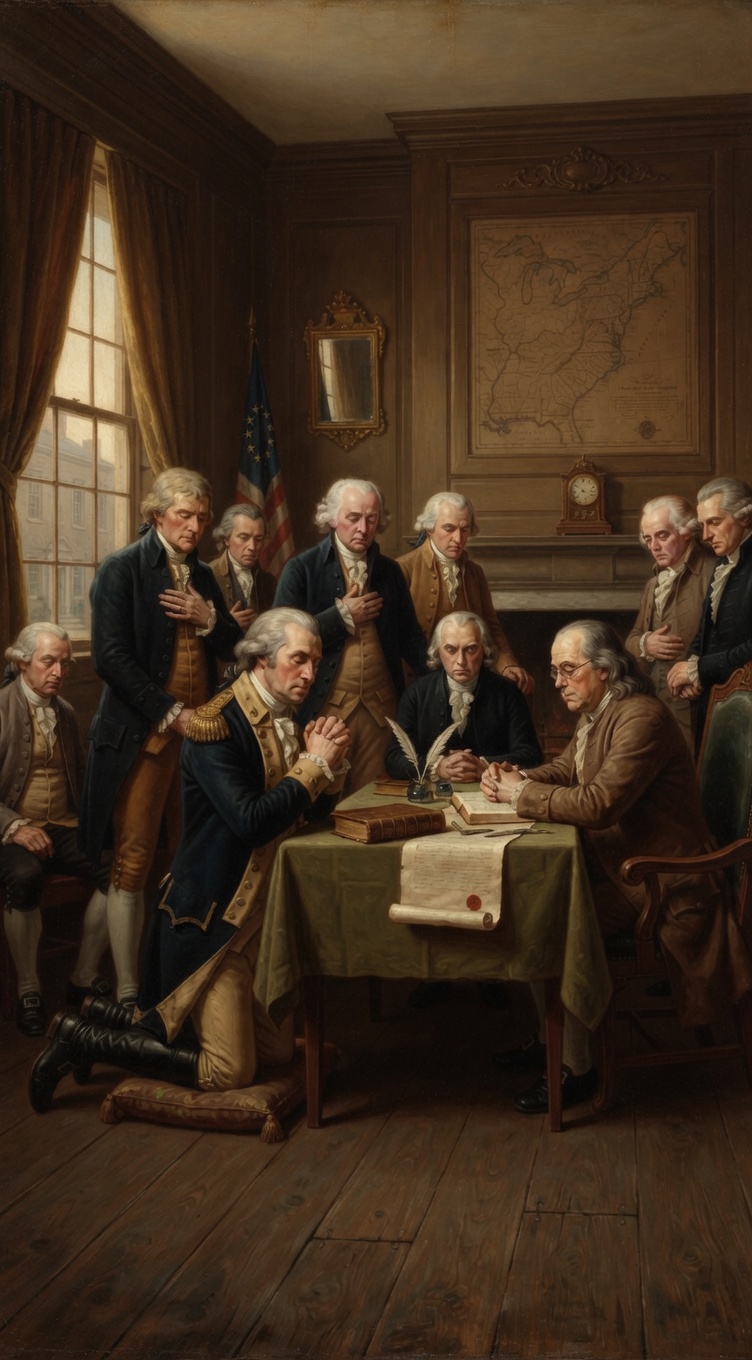 When the Treaty of Paris was signed in 1783, it did more than end a war. It completed the legal act of founding. The Declaration had announced the intention to be free. The Constitution would later establish the framework of government. But the Treaty of Paris was the document by which the existing nations of the world recognized the United States as a legitimate, independent country.
And that document — the one that made America a nation in the eyes of the world — began by placing the entire enterprise under the name of the most holy and undivided Trinity. The signers, including future presidents John Adams and the great Benjamin Franklin, were content to have their names appear beneath that explicitly Christian opening. They saw no conflict between their faith and their duty as statesmen.
This was not the act of men trying to create a secular state. This was the act of men who believed that the success of their cause depended on the blessing of the God they publicly named.
A Blessed Nation Whose God Is the Lord
The founders did not create a theocracy. They did not establish a national church at the federal level. But they also did not create a godless or religiously neutral republic. They built a nation whose founding documents, founding fathers, and founding practices were saturated with the acknowledgment of the God of the Bible and the principles that flow from His Word.
As America celebrates its 250th anniversary, we do well to remember the actual words of the document that made us a nation: “In the name of the most holy and undivided Trinity.” We do well to remember that the men who signed that treaty, along with the men who signed the Declaration and framed the Constitution, repeatedly testified that the success of this experiment depended on the continued faith and morality of the American people.
Blessed is the nation whose God is the Lord. America’s founders knew this. They said it in their documents. They lived it in their public and private lives. And they warned us what would happen if we ever forgot it.
The Call for This Generation
Two hundred and fifty years after the Treaty of Paris, America stands at a crossroads. We can continue to pretend that our nation was founded on secular principles that have no need of God, or we can return to the actual record of our founding.
The founders were not perfect men. They were flawed, as all men are. But they were men who believed that God rules in the affairs of nations and that a people who forget Him do so at their peril. They built this country on the conviction that liberty is the gift of the Creator and that it can only be preserved by a virtuous and religious people.
As we celebrate 250 years of American independence, may we have the courage to tell the truth about our beginning. May we remember that the document which made us a nation began by invoking the most holy and undivided Trinity. And may we pray that the God who blessed our founding would once again be honored in the land He helped establish.