John’s Seven Days – The New Creation Echoing Genesis
In the Beginning – John 1 and Genesis 1
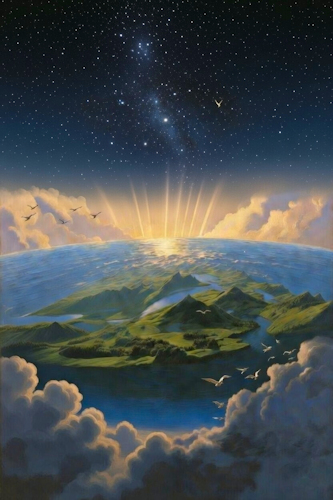 The Gospel of John opens with a deliberate echo of Genesis: “In the beginning was the Word, and the Word was with God, and the Word was God” (John 1:1). This mirrors the very first words of Scripture: “In the beginning God created the heaven and the earth” (Genesis 1:1).
John immediately identifies Jesus as the Word (Logos) — the creative power through whom “all things were made” (John 1:3). In Genesis, God creates by speaking: “And God said, Let there be light” (Genesis 1:3). John presents Jesus as that spoken Word, the agent of creation. Light is a central theme: Genesis separates light from darkness on Day 1; John says “In him was life; and the life was the light of men” (John 1:4), and “the true Light, which lighteth every man that cometh into the world” (John 1:9).
This opening sets the stage for John’s Gospel as a “new creation” narrative. Just as Genesis describes seven days of creation culminating in rest, John structures the first two chapters around a seven-day cycle that ends with the wedding at Cana on the “seventh day.” Scholars widely recognize this intentional parallel, showing Jesus as the one who fulfills and renews the original creation.
The structure is not forced — it emerges naturally from John’s careful time markers: “the next day,” “the day following,” and “the third day.” Let’s walk through each day in detail and see how John deliberately echoes Genesis.
“In the beginning was the Word, and the Word was with God, and the Word was God.” — John 1:1 (AKJV)
Day 1 – John the Baptist’s Witness (John 1:19–28)
The first day begins with priests and Levites questioning John the Baptist: “Who art thou?” (John 1:19). John denies being the Christ, Elijah, or the Prophet, but quotes Isaiah: “I am the voice of one crying in the wilderness, Make straight the way of the Lord” (John 1:23; Isaiah 40:3).
This day corresponds to Genesis Day 1, where God separates light from darkness. John the Baptist is the “witness to the light” (John 1:7–8), preparing the way for Jesus, the true Light. Just as Genesis begins with creation out of formless void, John begins with the Baptist’s voice in the wilderness, announcing the coming Creator. The separation of light and darkness is mirrored in John’s role: he points away from himself (“He must increase, but I must decrease” – John 3:30) toward the true light of Christ.
Day 2 – Behold the Lamb of God (John 1:29–34)
“The next day” (John 1:29) John sees Jesus and declares: “Behold the Lamb of God, which taketh away the sin of the world” (John 1:29). He repeats it the next day, and two disciples follow Jesus.
Genesis Day 2 separates the waters above from the waters below, creating the sky. In John, John the Baptist mentions his baptism with water, but points to Jesus who baptizes with the Holy Spirit (John 1:33). The “Lamb of God” echoes the Passover lamb in Exodus 12, connecting to creation’s separation of waters (the flood in Genesis 6–9 separated the saved from the judged). Jesus is the Lamb who separates sin from sinners, fulfilling the separation motif.
The disciples’ question “Where dwellest thou?” (John 1:38) and Jesus’ reply “Come and see” introduce the theme of dwelling — God’s presence moving into creation, just as the Spirit hovered over the waters on Day 2.
Day 3 – The First Disciples Follow (John 1:35–42)
“Again the next day” (John 1:35) John points to Jesus, and two disciples follow Him. Jesus asks, “What seek ye?” They reply, “Rabbi… where dwellest thou?” He says, “Come and see” (John 1:38–39). One disciple, Andrew, brings his brother Simon, whom Jesus names Peter (John 1:42).
Genesis Day 3 gathers waters to reveal dry land and produces vegetation. In John, Jesus gathers His first disciples — the “dry land” emerging from the “waters” of John the Baptist’s ministry. Peter (rock) echoes the earth/land theme. The call to “come and see” invites them into new life, like the fruitfulness of Day 3. Andrew and Simon become the first “fruit” of Jesus’ ministry, mirroring the land bringing forth fruit.
Day 4 – Philip and Nathanael Called (John 1:43–51)
“The day following” (John 1:43) Jesus calls Philip: “Follow me” (John 1:43). Philip tells Nathanael: “We have found him, of whom Moses in the law, and the prophets, did write, Jesus of Nazareth” (John 1:45). Nathanael is skeptical: “Can there any good thing come out of Nazareth?” Philip says, “Come and see” (John 1:46).
Jesus sees Nathanael and says: “Behold an Israelite indeed, in whom is no guile” (John 1:47). Nathanael asks how He knows him; Jesus replies: “Before that Philip called thee, when thou wast under the fig tree, I saw thee” (John 1:48). Nathanael declares: “Rabbi, thou art the Son of God; thou art the King of Israel” (John 1:49).
Genesis Day 4 creates lights in the sky — sun, moon, stars — to rule day and night. In John, Jesus reveals His divine knowledge, “seeing” Nathanael under the fig tree. Jesus is the true light who rules, echoing John 1:9: “That was the true Light, which lighteth every man that cometh into the world” (John 1:9). Nathanael’s confession “Son of God” and “King of Israel” points to Jesus as the ruler of creation, fulfilling Day 4’s theme of heavenly authority.
Days 5 & 6 – The Journey to Galilee (Implied)
John skips explicit events for Days 5 and 6, but the journey to Cana implies movement — travel over land and possibly water. Genesis Day 5 creates birds and sea creatures; Day 6 creates land animals and man in God’s image. In John, Jesus is gathering disciples (humanity) and moving toward the wedding. The journey prepares for the climax: the new humanity and new creation at the wedding feast.
The absence of specific events is intentional — John focuses on the disciples’ growing recognition of Jesus. The journey itself is the gathering of living beings (disciples) who will become the new creation community.
Day 7 – The Wedding at Cana (John 2:1–11)
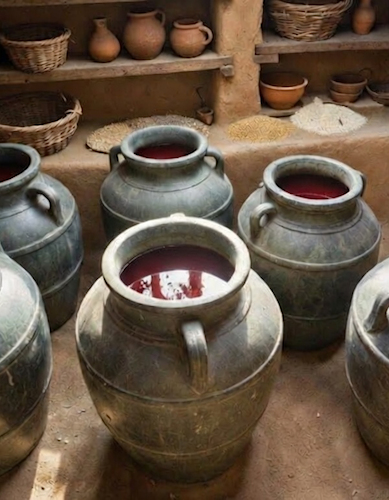 “And the third day there was a marriage in Cana of Galilee” (John 2:1). From Day 4 (Philip and Nathanael), this is the seventh day in the sequence. Jesus turns water into wine at the wedding.
Genesis Day 7 is the Sabbath rest. In John, the wedding feast symbolizes rest, joy, and new creation. Wine represents abundance and blessing (Psalm 104:15). The six stone jars were for purification rites, linking to Old Testament law; Jesus transforms them into new wine, symbolizing the new covenant. The wedding echoes Genesis 2:18–25, where God creates marriage. Jesus as the bridegroom begins His ministry with a wedding miracle, pointing to the marriage supper of the Lamb (Revelation 19:7–9).
The miracle on the seventh day shows Jesus bringing rest and joy to creation — the new creation has begun. The water of law becomes the wine of grace. The wedding feast is the climax of the seven days, just as God’s rest is the climax of Genesis.
The Meaning for Us Today
John’s seven-day structure shows Jesus as the new Creator, bringing light, life, and abundance. Genesis describes the first creation; John shows the new creation in Christ. Each day in John mirrors Genesis, showing Jesus fulfilling and surpassing the original creation. The wedding at Cana on Day 7 reveals that in Jesus, the best is yet to come. The water of law becomes the wine of grace. John’s Gospel calls us to “come and see” the one who makes all things new.
This connection invites us to see our lives as part of God’s new creation. Just as God rested on Day 7, Jesus invites us to rest in Him. The wedding at Cana shows that in Jesus, the best is yet to come. The water of law becomes the wine of grace. John’s Gospel calls us to “come and see” the one who makes all things new.