Render to Caesar What Is Caesar’s: What “Separation of Church and State” Never Meant
A Phrase That Was Never in the Founding Charter
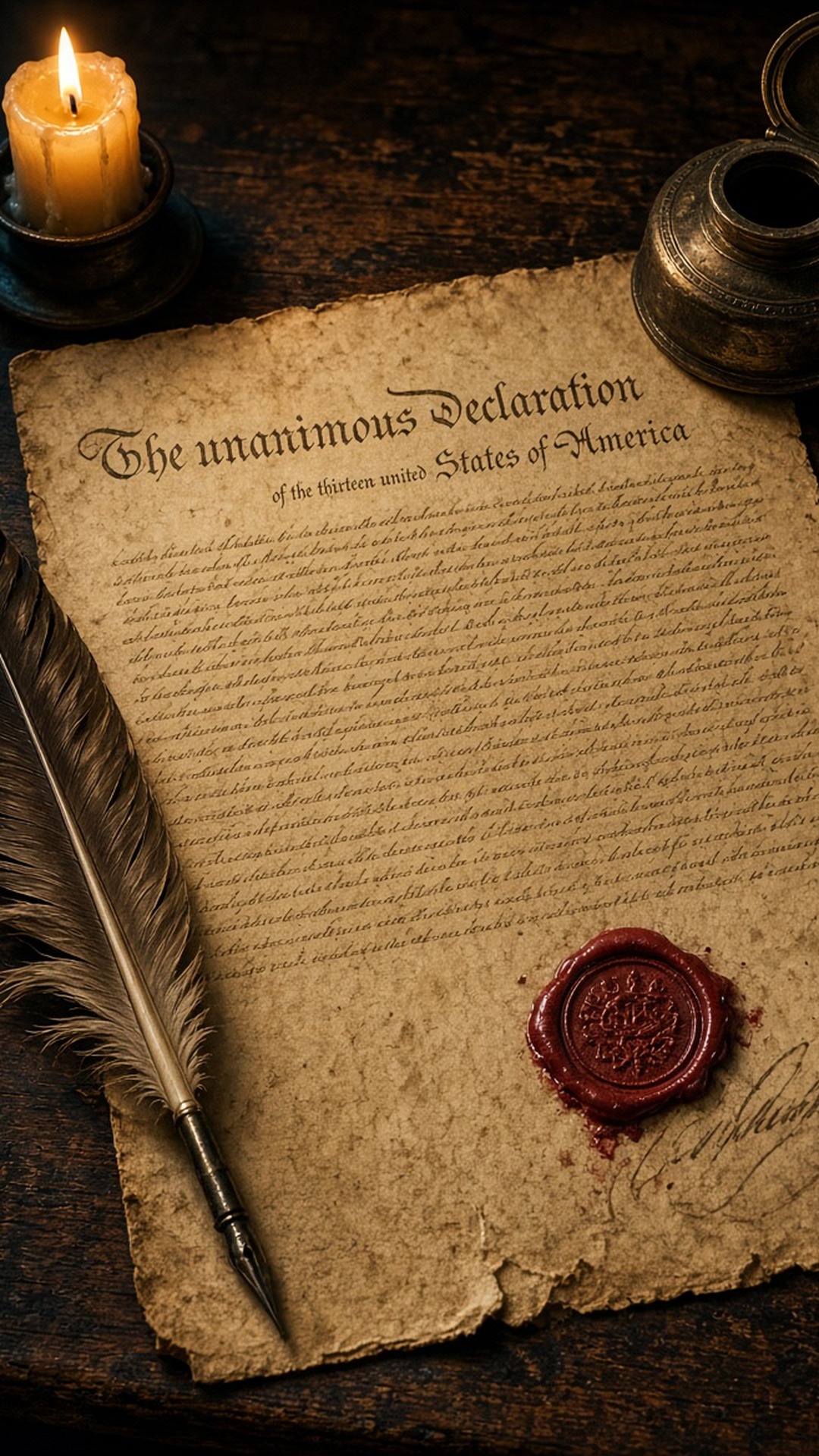 Millions of Americans can quote a line they believe sits in the Declaration of Independence or the Constitution: “separation of church and state.” It does not sit in either document. Search the Declaration from its opening to its closing appeal to Divine Providence. The phrase is not there. Search the Constitution and the Bill of Rights. The phrase is not there. What the First Amendment actually says is simpler and more precise: “Congress shall make no law respecting an establishment of religion, or prohibiting the free exercise thereof.”
Those two clauses do two things. They forbid the federal government from setting up a national church. They also forbid the federal government from stopping people from worshiping. That is not the same thing as banishing God from public life, stripping the Bible from the moral foundation of a people, or telling Christians their faith must stay indoors. The founders had just come out from under a world where the state could establish a church and punish dissent. They refused that. They did not refuse the confession that rights come from the Creator.
The Declaration is openly theological. It speaks of “the Laws of Nature and of Nature’s God.” It says men “are endowed by their Creator with certain unalienable Rights.” It appeals to “the Supreme Judge of the world.” It closes with “a firm reliance on the protection of divine Providence.” That is not a secular shrug. That is a nation locating liberty above the king because it comes from God. If the founders had intended a godless public square, they chose a strange way to announce their independence.
“They said to him, ‘Caesar’s.’ Then he said to them, ‘Give therefore to Caesar the things that are Caesar’s, and to God the things that are God’s.’” — Matthew 22:21 (WEB)
Where the “Wall” Actually Came From
The famous phrase comes from a letter, not from the charter of the country. In 1802, President Thomas Jefferson wrote to the Danbury Baptist Association in Connecticut. Those Baptists knew what an established state church could do to dissenters. Jefferson told them he believed with them that religion “is a matter which lies solely between Man and his God,” and that the First Amendment built “a wall of separation between Church and State.”
Read that letter in its setting. Jefferson was reassuring a minority church that the federal government would not run their worship, tax them to fund another denomination, or appoint their ministers. The wall was meant to keep the state from ruling the church. It was not written to keep the church from speaking, praying, or forming the conscience of a free people. It was not written to erase the Creator from the Declaration. It was not written into the Constitution at all.
A private presidential letter cannot outrank the text of the First Amendment, and it cannot rewrite the Declaration. When later generations treated Jefferson’s metaphor as if it were the supreme law, they turned a protection of free worship into a weapon against public faith. That is the reverse of what persecuted Baptists were asking for. They wanted room to obey God without Caesar’s permission. They did not want a nation that pretended it had no God.
The Trap They Set for Jesus
People often drag Matthew 22 into this debate as if Jesus invented modern secularism. He did not. The Pharisees and the Herodians were trying to trap Him. “Tell us therefore, what do you think? Is it lawful to pay taxes to Caesar, or not?” (Matthew 22:17). If He said yes, many Jews would call Him a collaborator with Rome. If He said no, they could accuse Him of rebellion. It was a political ambush dressed as a Bible question.
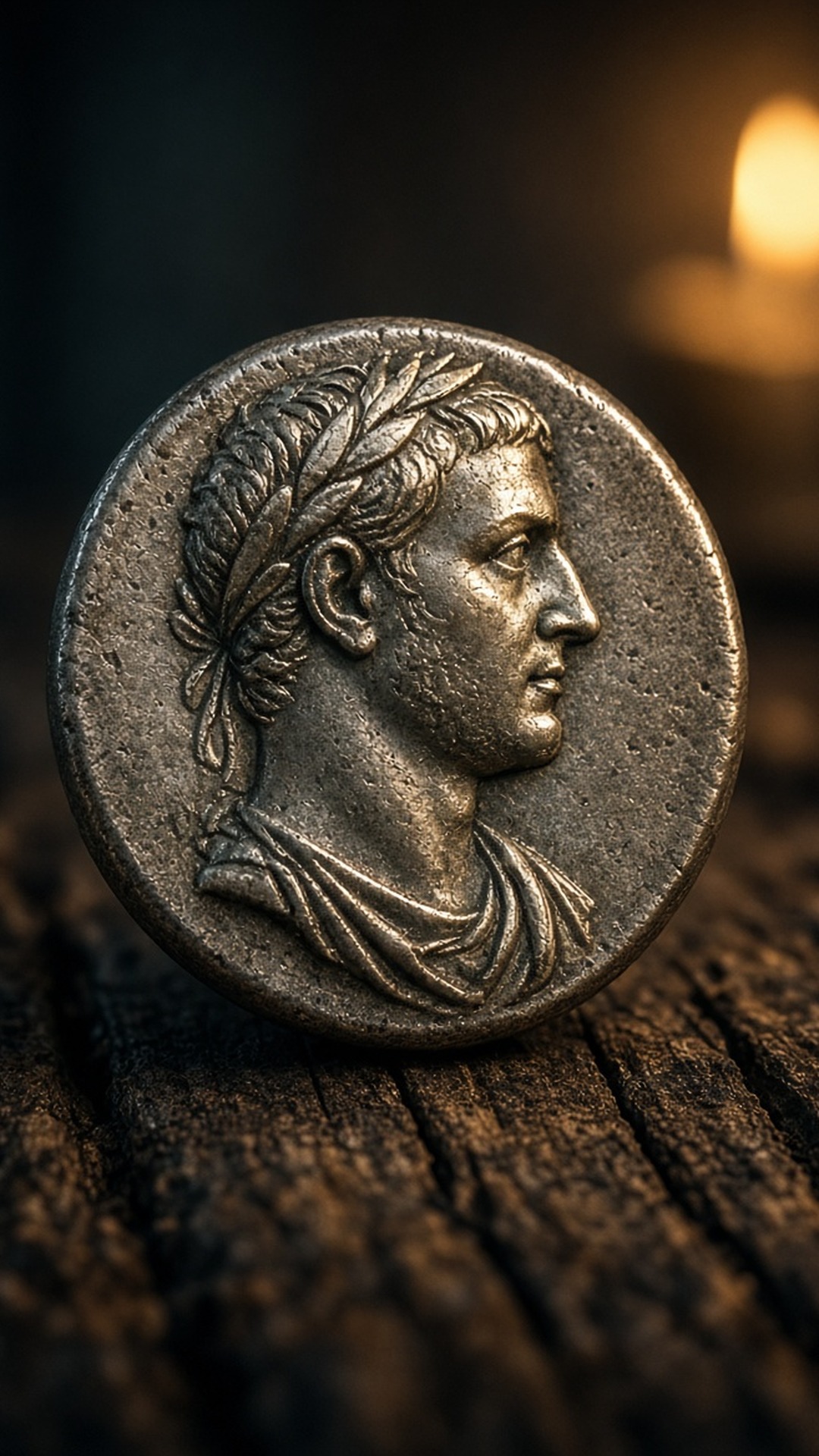
Jesus asked for the coin. “Show me the tax money.” They brought Him a denarius. “Whose is this image and inscription?” They said, “Caesar’s.” Then came the sentence that has been stretched for two thousand years: “Give therefore to Caesar the things that are Caesar’s, and to God the things that are God’s” (Matthew 22:19-21). Matthew adds that they marveled and left Him (Matthew 22:22). The trap failed because He would not be owned by either side of their scheme.
The key word is the image. The coin bore Caesar’s likeness, so the tax token could go back to Caesar. But man bears another image. “God created man in his own image. In God’s image he created him; male and female he created them” (Genesis 1:27). If the coin belongs to the one whose face it carries, then the man belongs to the One whose image he carries. Jesus was not carving the world into a God-free zone for government and a private zone for faith. He was saying that Caesar may have his coin. Caesar may not have the person.
What “Render” Actually Means
“Render” is not a casual tip. It means to give back what is owed, to pay what belongs to another, to surrender what is due. Jesus did not tell His hearers to invent a Caesar-shaped religion. He told them to pay the tax that the image on the coin required, and then He immediately raised the higher claim. Give God what is God’s.
What belongs to God? Everything the coin cannot buy. The heart. The worship. The conscience. The body. The family. The future. “The earth is Yahweh’s, with its fullness; the world, and those who dwell in it” (Psalm 24:1). “You shall love the Lord your God with all your heart, with all your soul, and with all your mind” (Matthew 22:37). That command comes in the same chapter as the tax question. Jesus would not let them reduce the argument to money while they withheld the self.
Paul later taught believers to be subject to governing authorities because those authorities are servants of God for good, and to pay tax to whom tax is due, honor to whom honor is due (Romans 13:1-7). That is not worship of the state. It is limited obedience under God. When the same apostles were ordered to stop preaching Christ, they answered, “We must obey God rather than men” (Acts 5:29). Caesar gets the coin. Caesar does not get the pulpit, the conscience, or the definition of righteousness.
So the popular twist — “Jesus said keep God out of government” — is almost the opposite of the text. Jesus said there are things that are Caesar’s. He also said there are things that are God’s, and those things are not Caesar’s to take.
Two Kingdoms, Not Two Gods
 Scripture does distinguish the work of the magistrate from the work of the church. The sword is not the keys. The state is not the bride of Christ. A pastor is not a Caesar, and a Caesar is not a priest. Confusion of those offices has done real damage in history, whether a throne tried to run the church or a church tried to seize the throne. The New Testament will not baptize that confusion.
But distinction is not exile. God remains Lord over both church and state. “By me kings reign, and princes decree justice” (Proverbs 8:15). Nebuchadnezzar learned that “the Most High rules in the kingdom of men, and gives it to whomever he will” (Daniel 4:32). Pilate was told he would have no authority unless it had been given from above (John 19:11). The state is not sovereign. It is borrowed.
That is why a Christian can pay taxes without worshiping the empire, serve in public office without making the state his savior, and refuse when the state demands what belongs only to God. The early church lived under pagan Caesars and still confessed “Jesus is Lord” (Romans 10:9). That confession was not a hobby. In Rome, lordship language belonged to Caesar. The church gave it to Christ.
What the American Founding Actually Sounded Like
The men who formed the United States were not all of one denomination, and they were not all equally orthodox. They were, however, writing in a world soaked in Scripture, and they said so in public. The Treaty of Paris in 1783 — the legal document by which Britain recognized the United States as a nation — opened “In the name of the most holy and undivided Trinity.” The nation’s birth certificate before the watching world began with the triune God, not with a wall that locked Him out.
George Washington, in his Farewell Address, warned that “religion and morality are indispensable supports” of political prosperity, and that one should “with caution indulge the supposition that morality can be maintained without religion.” John Adams wrote that “Our Constitution was made only for a moral and religious people. It is wholly inadequate to the government of any other.” Those are not arguments for a state church. They are arguments that liberty requires a people who fear God.
Early state practice matched that assumption more closely than modern slogans admit. Several of the original states required profession of the Christian faith for officeholders. In 1782 Congress commended Robert Aitken’s English Bible, printed in America during the war, as useful for the schools of the new nation. None of that created a theocracy. All of it shows that the first generations did not think “free exercise” meant “God may not be mentioned.”
The Constitution also refused a federal religious test for national office (James 2:1 is not the legal source, but the principle of impartiality is biblical). That refusal protected the church from becoming a department of the federal government. It did not declare that the nation had no moral Lord. Article VI and the First Amendment were guards against coerced establishment. They were not a confession of public atheism.
What Separation Is — and What It Is Not
Separation of the institutions is wise. The church must not become a party machine. The state must not become a bishop. Jesus Christ builds His church by the Word and Spirit, not by the sword of Caesar (Matthew 16:18; Zechariah 4:6). When churches chase power the way Herodians chased Rome, they stop sounding like the crucified King.
Separation of God from the public square is not wise, and it is not what Jesus taught. Marriage, the value of life, truth-telling, the meaning of the human person, and the limits of the state are not merely “policy preferences.” They rest on whether man is an accident or an image-bearer. If the state may redefine what God has joined, or treat a child as disposable, or command the church to bless what God calls sin, then Caesar has taken more than his coin. He has reached for the image.
The prophets were not silent toward kings. Nathan confronted David (2 Samuel 12:7). Elijah confronted Ahab (1 Kings 18:18). John the Baptist told Herod, “It is not lawful for you to have her” (Matthew 14:4). That was not a violation of some imagined wall. That was the Word of God addressing the man who held the sword.
A free people should want a government that will not baptize one denomination by law. A faithful church should still tell that government the truth about God, man, sin, and judgment. Those two sentences can live together. They lived together in the First Amendment’s actual words.
Lordship Does Not Stop at the Courthouse Steps
The deeper issue under the slogan is always lordship. Who gets the last word? If Jesus is Lord, He is Lord of the whole person — Sunday and Monday, house and work, private prayer and public witness. “He is the head of the body, the assembly… that in all things he might have the preeminence” (Colossians 1:18). “All things” is an inconvenient phrase for anyone who wants a compartment labeled “Caesar only.”
The Pharisees wanted a Messiah who would fit their tradition. The Herodians wanted a teacher who would not threaten Rome. Jesus would not be reduced to either mascot. He paid the tax and claimed the man. He honored legitimate civil order and refused to let civil order become a god. That is the pattern for His people still.
Give Caesar the coin that bears his face. Pay what is owed. Pray for kings and all in authority, “that we may lead a tranquil and quiet life in all godliness and reverence” (1 Timothy 2:1-2). Then give God the life that bears His image. Do not let a phrase that never appeared in the Declaration become more sacred than the sentences that did. Do not let a letter from 1802 outshout Matthew 22. And do not call it narrow when a Christian says that the Judge named in the Declaration is still the Judge of nations.
Give God What Bears His Image
The question Jesus asked about the coin is still the question under every debate about church and state. Whose image is this? The money in your pocket may carry a national motto. Your soul carries a Maker’s mark. The state may levy a tax. It may not levy worship. It may keep order. It may not redefine the human being God made.
Separation of church and state, in its honest historic sense, means this: the government does not get to run the church, and the church does not get to become the government. It does not mean the Declaration was godless. It does not mean Jesus handed public life to Caesar. It does not mean Christians must hide the Name by which they are saved.
Render to Caesar what is Caesar’s. Then remember the rest of the sentence — the part too many people drop. Render to God what is God’s. That includes the conscience no Congress created, the rights no king granted, and the person stamped with an image no empire has the right to erase.
“God created man in his own image. In God’s image he created him; male and female he created them.” — Genesis 1:27 (WEB)