Seven Silent Witnesses: How Scripture and Creation Declare the Glory of God
1. Eight Souls and the Blood of Humanity
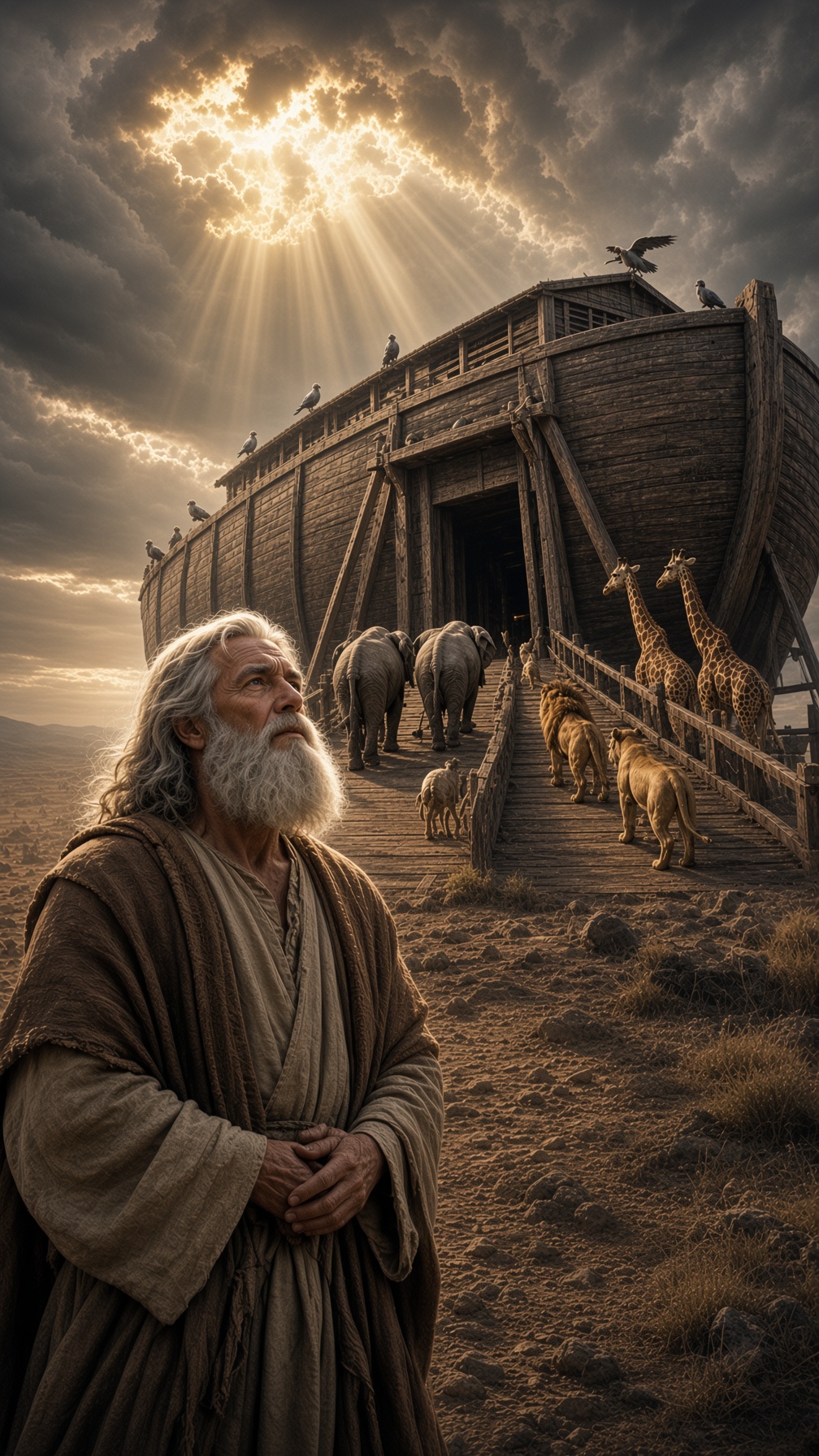 When the judgment of the flood came upon the earth, God did not spare the world by degrees or by percentages. He preserved a precise number of human beings: eight. Scripture is careful to record this number more than once. Peter writes, “…in which a few, that is, eight souls, were saved through water” (1 Peter 3:20). Genesis itself tells us that Noah, his wife, his three sons, and their three wives entered the ark (Genesis 7:13). From these eight people the entire human family was restarted after the waters receded.
This is not a minor detail. It is a foundational claim of Scripture about the origin of every nation, tribe, and tongue that exists today. All of us — every ethnicity, every bloodline, every people group — descend from this one family. The apostle Paul later affirmed the same truth when he declared to the philosophers of Athens that God “made from one blood every nation of men to dwell on all the surface of the earth” (Acts 17:26).
Modern genetics has only confirmed what Scripture already stated. The major blood groups that circulate in the veins of every human being on earth are fully accountable within the genetic potential of a single founding family. There is no need to invent multiple independent origins for different races or different continents. One family, carefully preserved by God, is sufficient to explain the entire diversity of the human race. The blood that flows in the body of a believer in Africa, a believer in Asia, a believer in Europe, and a believer in the Americas is the same blood that was carried through the waters of the flood inside the ark.
This truth carries deep theological weight. It means that the human race is one. Racism, tribalism, and ethnic pride have no foundation in the created order as God designed it. We are all sons and daughters of Noah. More importantly, it means that the gospel is for every person without distinction. The same blood that was preserved through the flood is the blood that needs redemption. And the Redeemer who came is the Seed of the woman who would crush the serpent’s head — a promise first given before the flood and fulfilled in Christ for people from every nation.
When a Christian looks at the diversity of the church gathered from every tribe and tongue, he is looking at the fruit of God’s faithfulness to eight souls. The ark was not merely a boat; it was a vessel of covenant mercy. The same God who numbered the people He would save also numbered the days of the flood and the animals He would preserve. Nothing was left to chance. The eight were chosen, protected, and delivered so that the purpose of God in redemption might continue.
The flood account also teaches us about judgment and mercy held together. God did not overlook sin. The wickedness of man was great on the earth, and every intention of the thoughts of his heart was only evil continually (Genesis 6:5). Yet in the midst of that judgment, God remembered Noah. Mercy was not given at the expense of justice; justice was satisfied while mercy was extended to the remnant. This same pattern reaches its climax at the cross, where perfect justice and perfect mercy meet in the person of Jesus Christ.
“And God blessed Noah and his sons, and said to them, ‘Be fruitful, multiply, and replenish the earth.’” — Genesis 9:1 (WEB)
2. Light Before the Sun
The opening chapter of Genesis presents a sequence that has troubled some and strengthened others. On the first day God said, “Let there be light,” and there was light. He separated the light from the darkness and called the light Day and the darkness Night. There was evening and there was morning — the first day (Genesis 1:3-5). Yet the sun, moon, and stars are not mentioned until the fourth day, when God said, “Let there be lights in the expanse of the sky to divide the day from the night” (Genesis 1:14).
This order is not a scientific embarrassment. It is a theological declaration. Light does not ultimately come from the sun. Light comes from God. The sun is a created servant, appointed later to govern the day and to give signs and seasons. But the true Light existed before any star was set in the heavens. John later wrote of Christ, “In him was life, and the life was the light of men. The light shines in the darkness, and the darkness hasn’t overcome it” (John 1:4-5). Jesus Himself declared, “I am the light of the world. He who follows me will not walk in the darkness, but will have the light of life” (John 8:12).
The sequence in Genesis teaches us that God is not dependent on the things He creates. He is the source. The sun is a gift, but it is not the origin. When the physical sun is darkened — whether by eclipse, by storm, or by the final judgments described in Revelation — the true Light remains. Believers walk in a light that does not come from the created order. They walk in the light of the knowledge of the glory of God in the face of Jesus Christ (2 Corinthians 4:6).
This truth has practical power for the soul. There are seasons when the lights of this world go out — when health fails, when relationships break, when the future looks black. In those moments the believer remembers that light existed before the sun. The same God who commanded light on the first day still commands light in the heart of His people. He is not limited by the absence of secondary causes. He is the primary Cause, and He is enough.
The early church often reflected on this order with wonder. They saw in it a picture of the spiritual order of salvation. God first shines the light of the gospel into the darkness of the human heart. Only later does He bring the full structure of Christian understanding. But the light itself comes first, and it comes from Him alone. The believer who walks through seasons of darkness can hold fast to this reality: the Light was here before the sun, and the Light will remain after every created light has failed.
3. The Serpent and the Lamb
From the third chapter of Genesis the serpent stands as the emblem of the curse, the deceiver, and the enemy of the seed of the woman. God Himself pronounced the judgment: “I will put hostility between you and the woman, and between your offspring and her offspring. He will bruise your head, and you will bruise his heel” (Genesis 3:15). The serpent’s venom is deadly. Its bite brings death.
Yet in the created order God has left a quiet and remarkable picture. The most effective antivenom for the deadliest snakebites is produced from the blood of lambs and sheep. Antibodies raised in the blood of these animals are used to neutralize the toxins of the serpent. The blood of the lamb, quite literally, overcomes the poison of the snake.
This is not a stretch of imagination. It is a fact of medical science that mirrors a far greater spiritual reality. When John the Baptist saw Jesus coming toward him, he cried out, “Behold, the Lamb of God, who takes away the sin of the world!” (John 1:29). Peter later wrote that we were redeemed “with precious blood, as of a lamb without blemish or spot, the blood of Christ” (1 Peter 1:19). The writer of Hebrews tells us that the blood of bulls and goats could never take away sins, but the blood of Christ does what no animal sacrifice could accomplish (Hebrews 10:4; Hebrews 9/12).
The physical picture in creation is a shadow of the spiritual substance. The venom of sin is deadly. It spreads through the bloodstream of the human race. No human remedy can neutralize it. Only the blood of the Lamb of God is sufficient. When that blood is applied by faith, the power of the serpent is broken. The head is crushed. The poison loses its strength.
This witness calls the believer to continual dependence on the finished work of Christ. We do not fight the serpent in our own strength. We do not overcome by willpower or moral effort. We overcome by the blood of the Lamb and by the word of our testimony (Revelation 12:11). Every time a Christian resists temptation, forgives an enemy, or stands firm under trial, the blood of the Lamb is proving stronger than the venom of the serpent.
4. Laminin — The Cross That Holds Us Together
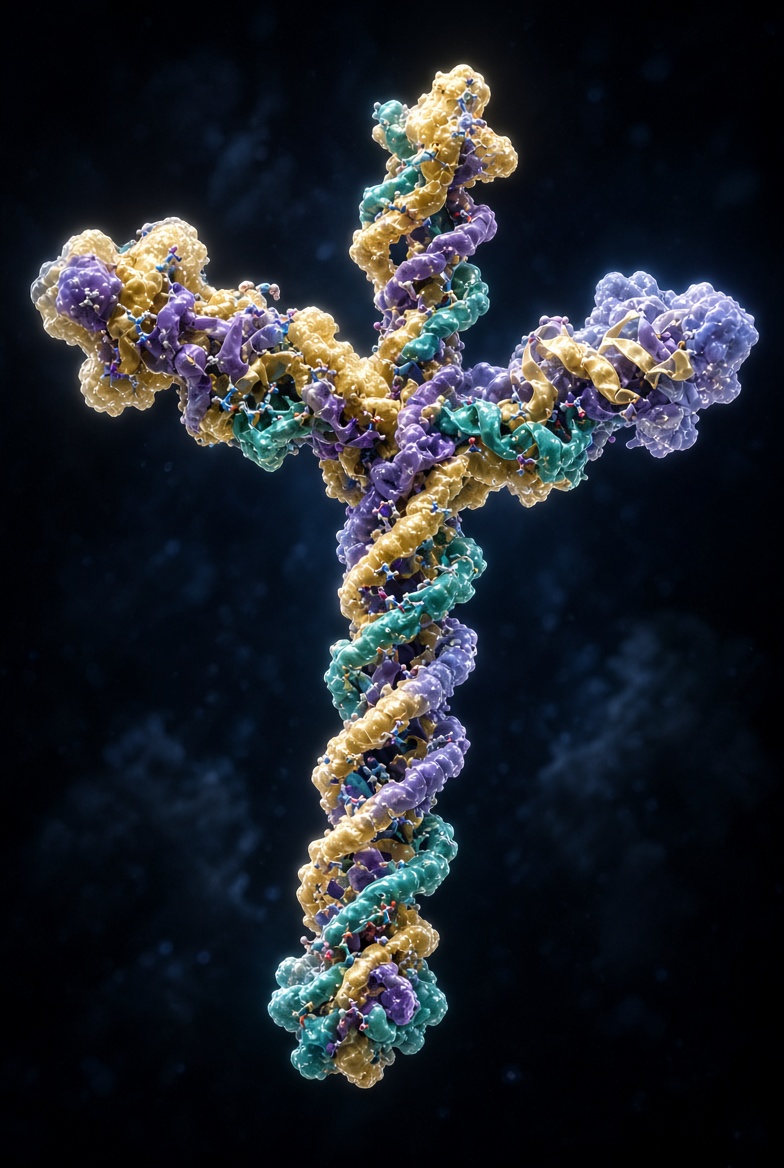 Inside every human body, at the molecular level, there is a protein called laminin. It is one of the key structural molecules that holds the cells of our tissues together. Without laminin, the body would fall apart. When scientists first examined laminin under an electron microscope, they discovered something remarkable: the molecule is shaped like a cross.
This is not a Christian invention imposed on the data. It is a simple observation of the physical structure God designed. The protein that keeps our bodies from disintegrating is cross-shaped. Paul had already written the theological reality that this molecule silently illustrates: “He is before all things, and in him all things hold together” (Colossians 1:17). The same Christ who was held to the cross by nails is the One who holds every atom of the universe in place by the word of His power (Hebrews 1:3).
The cross is not only the place of our redemption; it is the pattern of our existence. We are held together by the cross. Our bodies, our relationships, our churches, our hope — all of it is sustained by the crucified and risen Lord. When a believer feels as though life is coming apart, the quiet testimony of laminin is a reminder: the cross still holds. The same power that keeps the molecules of the body from flying apart keeps the soul from falling into despair.
This truth also rebukes any form of self-sufficiency. We do not hold ourselves together. We are held. The Christian life is not a matter of gripping tightly enough; it is a matter of being gripped by the One whose cross is the very structure of our being. “My grace is sufficient for you, for my power is made perfect in weakness” (2 Corinthians 12:9). The cross-shaped molecule in every cell is a constant, silent sermon that we are upheld by the crucified Christ.
5. The Folded Napkin
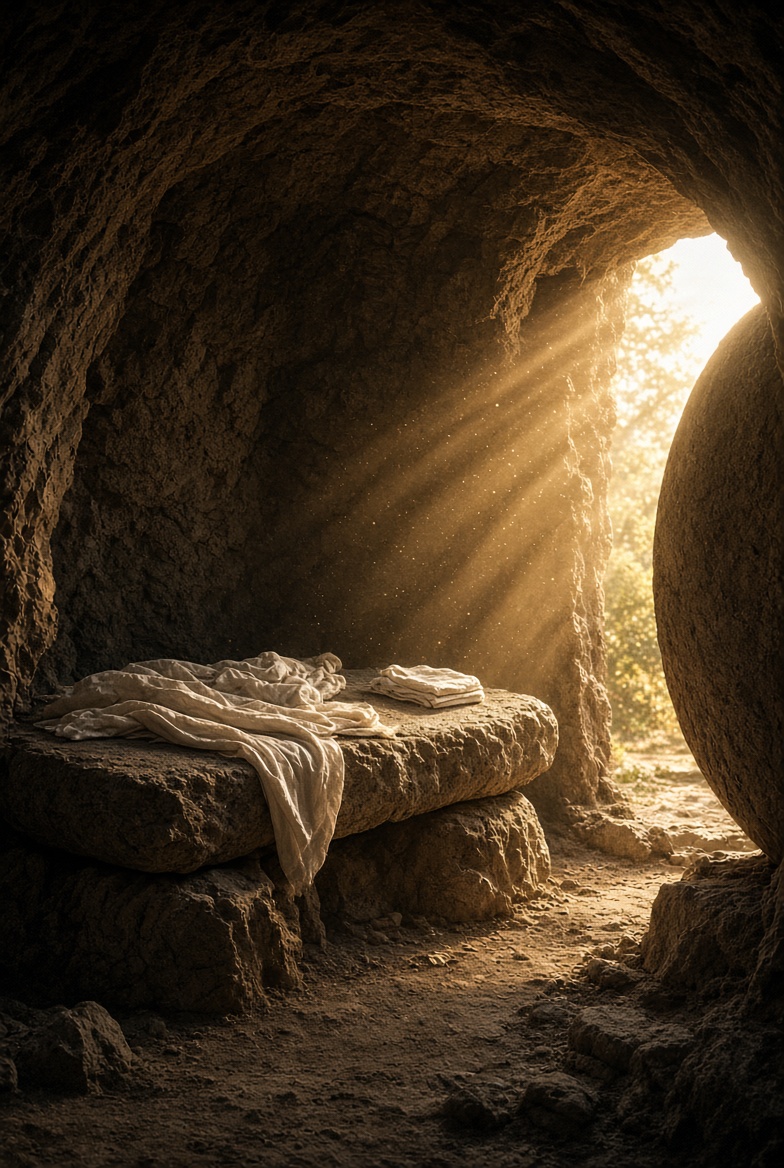 On the morning of the resurrection, Peter and John ran to the tomb. They found the linen cloths lying there, but the face cloth that had been on Jesus’ head was not lying with the other linens. It was folded up in a place by itself (John 20:6-7). John records this detail with care. It is not an accidental observation. It is part of the evidence that the body of Jesus was not stolen in haste. Grave robbers do not pause to fold a napkin.
In the culture of that day, a folded napkin carried a specific meaning at the dinner table. When a master left the table and intended to return, he would fold his napkin and leave it at his place. If he was finished and would not return, he would leave the napkin crumpled. The folded face cloth in the tomb was a silent message: the Master is not finished. He is coming back.
Jesus had already told His disciples, “I will not leave you orphans. I will come to you” (John 14:18). He had promised, “If I go and prepare a place for you, I will come again and will receive you to myself; that where I am, you may be there also” (John 14:3). The folded napkin is a quiet confirmation of those promises. The resurrection is not the end of the story. It is the beginning of the final chapter in which the risen Lord returns for His people.
This detail also strengthens the historical reliability of the resurrection accounts. The Gospel writers include small, seemingly incidental observations that no one inventing a story would think to include. The folded napkin is one of those details. It fits the character of the risen Christ — orderly, intentional, and full of meaning even in the smallest actions.
For the believer today, the folded napkin is a call to hope. The Master has left the table, but He has folded the napkin. He is coming back. Every time we gather at the Lord’s Table and remember His death, we also proclaim His return. “For as often as you eat this bread and drink this cup, you proclaim the Lord’s death until he comes” (1 Corinthians 11:26). The napkin is still folded. The promise still stands.
6. The Ichthys — Jesus Christ, God’s Son, Savior
In the early centuries of the church, when open profession of faith could cost a believer his life, Christians used a simple symbol to identify one another: the outline of a fish. The Greek word for fish is ichthys. Those five letters form an acrostic that contains the heart of the gospel:
Iēsous Christos Theou Yios Sōtēr
Jesus Christ, God’s Son, Savior
Every time a believer drew the fish in the dust or carved it into a wall, he was confessing the full identity of Jesus. He is Jesus — the historical man who walked the roads of Galilee. He is the Christ — the long-promised Messiah of Israel. He is the Son of God — sharing the very nature of the Father. He is the Savior — the only One who can deliver from sin and death.
This simple acrostic is a masterpiece of compressed theology. It holds together the humanity and deity of Christ, His messianic office, and His saving work. The early church did not need long creeds to summarize the faith when they could draw a fish. The symbol itself was a creed.
The use of the fish also connected the church to the teaching of Jesus. He called His first disciples with the words, “Come after me, and I will make you fishers for men” (Matthew 4:19). He compared the kingdom of heaven to a net that gathers fish of every kind (Matthew 13:47). After the resurrection He cooked fish for His disciples on the shore of Galilee and restored Peter with a threefold question about love (John 21:9-17). The fish was already rich with meaning before the church ever used it as a secret sign.
Today the ichthys still appears on cars, jewelry, and church buildings. For many it has become merely a cultural marker. But for those who know its meaning, it remains a quiet confession of the full gospel. Jesus is the Christ. He is the Son of God. He is the Savior. That is enough to live by and enough to die by.
7. YHWH — The Breath of Life
When God revealed His name to Moses at the burning bush, He gave a name that is written with four consonants: YHWH. The Hebrew language at that time was written without vowels. The sacred name was considered too holy to pronounce lightly, so the exact vocalization was carefully guarded. Yet when those four letters are spoken without added vowel sounds, they form the simple pattern of human breath — an inhale followed by an exhale.
This is not a modern curiosity. It is a profound theological reality. Scripture tells us that God formed man from the dust of the ground and “breathed into his nostrils the breath of life; and man became a living soul” (Genesis 2:7). The first human breath was the breath of God. Every subsequent breath that any human being has ever taken is a continued gift from the same God.
Job recognized this when he said, “The Spirit of God has made me, and the breath of the Almighty gives me life” (Job 33:4). Elihu added, “If he set his heart on himself, if he gathered to himself his spirit and his breath, all flesh would perish together, and man would turn again to dust” (Job 34:14-15). Our next breath is not guaranteed by the strength of our lungs. It is given by the will of the One whose name is the sound of breathing.
This truth has both humbling and comforting power. It humbles us because it reminds us that we are sustained moment by moment by the free gift of God. It comforts us because the same God who gives breath also promises to be with us when breath becomes difficult. The psalmist wrote, “When I am afraid, I will put my trust in you” (Psalm 56:3). Even the act of breathing can become an act of worship when we remember whose name we are speaking with every inhale and exhale.
In the final analysis, every human life is a continuous confession of the name of God. The atheist who denies Him still breathes His name. The rebel who shakes his fist at heaven still depends on the breath that comes from Him. And the believer who trusts Him can turn every breath into praise. “Let everything that has breath praise Yah!” (Psalm 150:6).
The Unified Testimony
These seven witnesses do not stand alone. They form a single, coherent testimony. The God who preserved eight souls through the flood is the same God who gave light before the sun. The God who designed the blood of the lamb to overcome the venom of the serpent is the same God who shaped the molecule that holds our bodies together in the form of a cross. The God who left a folded napkin in the empty tomb is the same God whose name is the sound of every breath we take. The simple fish drawn by persecuted believers still confesses the full identity of the One to whom all these witnesses point.
Scripture and creation are not two competing voices. They are two parts of the same choir. When they are heard together, the glory of God becomes unmistakable. The psalmist was right: the heavens declare His glory. The apostle was right: the things that are made clearly reveal His eternal power and divine nature. And the believer who has eyes to see can walk through this world with quiet confidence, knowing that the God of the Bible has left His signature on everything He has made.
This is not a call to look for secret codes or hidden messages that only a few can decode. It is a call to open our eyes to what has been in plain sight all along. The blood in our veins, the light of the morning, the structure of our cells, the folded cloth of the resurrection, the simple outline of a fish, and the breath in our lungs — all of them speak. They speak of a Creator who is personal, intentional, and full of mercy. They speak of a Redeemer who has entered His own creation to save it. They speak of a Lord who is coming again.
A Call to Worship and Confidence
If these things are true — and Scripture and creation together declare that they are — then the only proper response is worship. The God who has left these silent witnesses is worthy of the full affection of our hearts, the full obedience of our lives, and the full confidence of our hope. We do not worship a distant deity who wound up the universe and walked away. We worship the living God who is present in every molecule, every sunrise, and every breath.
We also walk with greater confidence. The same God who ordered the days of creation has ordered the days of our lives. The same God who preserved eight people through the flood will preserve His people through every trial. The same God who crushed the serpent through the blood of the Lamb will finally put all enemies under His feet. The folded napkin still sits in the empty tomb as a promise that He is coming back. Until that day, we live by the light that existed before the sun, we are held together by the cross, and we breathe the name of the One who gives life.
Let every believer who reads these witnesses take heart. The world may rage. Skepticism may mock. Darkness may seem to advance. But the silent witnesses remain. They cannot be erased. They cannot be silenced. They continue to declare the glory of God to every generation that has ears to hear.
“For of him, and through him, and to him are all things. To him be the glory for ever! Amen.” — Romans 11:36 (WEB)