The Charcoal Fire: Two Fires, Two Failures, One Restoration
Two Fires, One Night of Betrayal
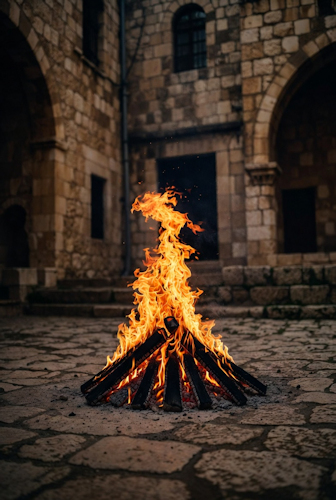 On the night Jesus was arrested, Peter followed at a distance into the high priest’s courtyard. A charcoal fire had been kindled there because it was cold (John 18:18). Peter stood among the servants and officers, warming himself by the flames. Three times he was asked if he knew Jesus — and three times he denied Him. Each denial happened in the glow of that same charcoal fire. After the third denial, the rooster crowed, just as Jesus had foretold. Peter went out and wept bitterly.
The charcoal fire is not a minor detail. It is the setting of Peter’s greatest failure — the moment he publicly rejected the One he had sworn to die for. The fire offered warmth and light, but it also exposed his fear. It became a witness to his brokenness.
"Now the servants and officers had made a charcoal fire, because it was cold, and they were standing and warming themselves. Peter also was with them, standing and warming himself." — John 18:18 (AKJV)
Another Fire — After the Resurrection
After Jesus rose from the dead, He appeared to the disciples by the Sea of Galilee. They had fished all night and caught nothing. From the shore, Jesus called out and instructed them to cast the net on the right side. The net filled with 153 large fish. When they came to land, they saw a charcoal fire already burning, with fish laid on it and bread (John 21:9). Jesus said, “Come and have breakfast.”
Notice the detail: Jesus Himself kindled another charcoal fire. This is the only time in Scripture that Jesus is described as cooking. But why a charcoal fire — again? The choice is deliberate. Jesus recreates the exact setting of Peter’s failure. The same kind of fire that witnessed Peter’s denial now becomes the place of restoration. God does not avoid the site of our shame; He meets us there with grace.
From Denial to Restoration: The Same Fire, a Different Outcome
The two charcoal fires form a powerful pair:
- First fire (John 18): Peter stands by it and denies Jesus three times. The fire exposes fear and failure.
- Second fire (John 21): Jesus stands by it, cooking breakfast, and asks Peter three times, “Do you love Me?” The fire becomes the place of healing and recommissioning.
Jesus does not ignore Peter’s failure — He intentionally revisits it. The charcoal fire that once symbolized betrayal now becomes the setting for love restored. Jesus does not condemn; He provides. He does not lecture; He feeds. The same flames that witnessed Peter’s lowest moment now warm him in the presence of the risen Lord.
"When they had gone ashore, they saw a fire of coals there, and fish laid on it, and bread." — John 21:9 (AKJV)
Why the Charcoal Fire Matters for Us
The two fires teach us profound truths about how God deals with our failures:
 God remembers the place of our shame: Jesus did not choose a random fire. He returned Peter to the very setting of his denial. God often meets us in the exact places we fell.
- Grace recreates the scene: The first fire exposed sin; the second fire covered it with provision and love. God does not erase our past — He redeems it.
- Jesus provides before He asks: He cooks breakfast before He questions Peter. Grace comes first; then comes the call to deeper love and service.
- Failure is not the end of the story: Peter’s threefold denial is answered by a threefold restoration. Our worst moments are not our final moments.
- The fire becomes a throne of grace: The same place of betrayal becomes the place of breakfast with the risen Lord. God turns altars of failure into tables of fellowship.
Wherever you have failed, whatever fire witnessed your denial, Jesus is willing to meet you there again. He brings bread and fish — provision and presence. He asks not for perfection, but for love. And out of that love, He recommissiones us to feed others. The charcoal fire is not the end; it is the place where restoration begins.