The Final Week of Jesus: From Palm Sunday to Resurrection Sunday – A Detailed Biblical and Historical Account
Introduction: The Most Important Week in History
 The final week of Jesus’ earthly ministry, often called Passion Week or Holy Week, is the most significant seven days in human history. From Palm Sunday to Resurrection Sunday, every event was prophesied centuries earlier and fulfilled with precision. This week changed everything: it accomplished redemption, defeated death, and opened the way for all humanity to be reconciled to God.
Most Christians know the broad outline — Palm Sunday, the Last Supper, the crucifixion on Friday, and the resurrection on Sunday — but many details remain unknown or misunderstood. This article explores the full timeline day by day, drawing from all four Gospels, historical context, Jewish customs, Roman practices, and astronomical calendar data. We will examine why many scholars believe the crucifixion occurred on April 3rd, 33 AD, what happened on the often-overlooked Saturday, and the profound significance of each moment. The week reveals Jesus as the promised Messiah who came to seek and save the lost, and it culminates in the greatest victory ever won.
The Gospels provide a harmonious picture when read together. Matthew, Mark, and Luke focus on events from a Jewish perspective, while John adds unique details and emphasizes theological meaning. Together they give a complete account. Let’s walk through the week day by day, with as much detail as possible, including insights that many believers have never considered.
“And it came to pass, when the time was come that he should be received up, he stedfastly set his face to go to Jerusalem.” — Luke 9:51 (AKJV)
Sunday – Palm Sunday: The Triumphal Entry
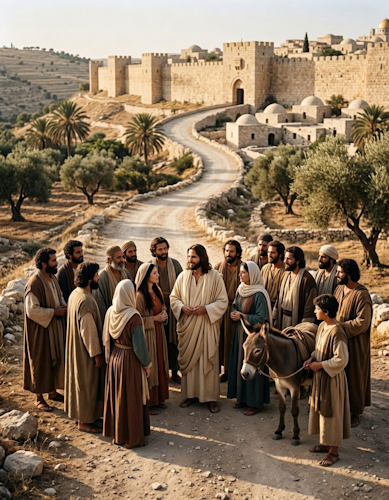
The week begins with Jesus’ deliberate, public entry into Jerusalem. On the first day of the week (Sunday), Jesus rides a young donkey into the city as the crowds shout “Hosanna! Blessed is he that cometh in the name of the Lord!” (Matthew 21:9). This fulfills Zechariah 9:9: “Rejoice greatly, O daughter of Zion; shout, O daughter of Jerusalem: behold, thy King cometh unto thee: he is just, and having salvation; lowly, and riding upon an ass, and upon a colt the foal of an ass” (Zechariah 9:9).
The crowds spread their garments and palm branches on the road, a royal welcome reserved for kings and conquerors. They expected a political Messiah who would overthrow Rome. Jesus knew their misunderstanding, yet He accepted the praise because the time had come for Him to present Himself as King. This was not a spontaneous parade; it was a calculated fulfillment of prophecy. The date was likely March 29 or April 2, 33 AD, depending on the calendar alignment.
Most Christians don’t realize the political tension. Roman soldiers were stationed on the temple walls, watching for rebellion. Jesus’ entry was a direct challenge to both religious and political powers. The Pharisees were furious and told Jesus to rebuke His disciples. He replied: “I tell you that, if these should hold their peace, the stones would immediately cry out” (Luke 19:40). The entry set the stage for the conflict that would lead to the cross.
After entering the city, Jesus went to the temple, looked around, and then returned to Bethany for the night. This quiet act showed He was in control of the timing. The crowds expected immediate revolution; Jesus knew the real battle was spiritual and would be won on the cross.
Monday – The Cleansing of the Temple
On Monday, Jesus returned to the temple and drove out the money changers and merchants. He overturned tables and declared: “It is written, My house shall be called the house of prayer; but ye have made it a den of thieves” (Matthew 21:13). This second cleansing (the first occurred early in His ministry in John 2) was a direct confrontation with the religious establishment.
The temple had become a marketplace. Money changers charged exorbitant rates to exchange Roman coins for temple currency. Merchants sold animals at inflated prices. The outer court, meant for Gentiles to pray, was turned into a noisy bazaar. Jesus’ anger was righteous: He was defending the house of God and the right of all nations to worship.
This act escalated the conflict. The chief priests and scribes began plotting how to kill Him. They feared His popularity with the people. Most Christians don’t realize that the cleansing was also a prophetic act fulfilling Malachi 3:1–3, where the Lord suddenly comes to His temple to purify it. Jesus was announcing that He was the Lord of the temple.
That evening Jesus left the city again, spending the night in Bethany. The pattern of the week was set: confrontation in the temple by day, withdrawal at night for prayer and rest.
Tuesday – Teaching, Controversy, and the Olivet Discourse
Tuesday was the longest and most intense day of teaching. Jesus returned to the temple and faced a series of challenges from the religious leaders. They questioned His authority. He responded with parables: the two sons, the wicked tenants, and the wedding banquet. Each parable exposed their hypocrisy and rejection of God’s messengers, culminating in the rejection of the Son.
The Sadducees asked about the resurrection. Jesus answered brilliantly, proving the resurrection from the Torah itself. The Pharisees tried to trap Him with the question about paying taxes to Caesar. Jesus’ answer — “Render therefore unto Caesar the things which are Caesar’s; and unto God the things that are God’s” (Matthew 22:21) — silenced them.
Later that day, Jesus delivered the Olivet Discourse on the Mount of Olives. He prophesied the destruction of the temple, the signs of His coming, and the end of the age. This discourse is one of the most detailed prophetic teachings in the Gospels. He warned of wars, famines, earthquakes, persecution, and the abomination of desolation spoken of by Daniel. Yet He promised that the gospel would be preached to all nations before the end.
Most Christians don’t realize that the Olivet Discourse has both near and far fulfillment. The destruction of Jerusalem in 70 AD fulfilled much of it, but the final fulfillment awaits the return of Christ. Jesus ended with the parable of the ten virgins, the talents, and the sheep and goats — emphasizing readiness and faithfulness.
That evening, Judas met with the chief priests and agreed to betray Jesus for thirty pieces of silver. By Wednesday, Judas had already decided to hand Jesus over. The stage was set for the final events.
Wednesday – The Day of Silence and Betrayal Plot
Many scholars call Wednesday “the day of silence.” The Gospels record no public teaching. Jesus spent the day in Bethany, likely resting and preparing for the coming ordeal. Meanwhile, Judas finalized his betrayal plan with the chief priests.
The thirty pieces of silver was the price of a slave in the Old Testament (Exodus 21:32). It was a deliberate insult — the religious leaders valued Jesus at the price of a slave. This fulfilled Zechariah 11:12–13, where the shepherd is paid thirty pieces of silver and the money is thrown to the potter.
Most Christians don’t realize that Wednesday was likely the day the Passover lambs were selected and examined for blemishes. Jesus, the true Passover Lamb, was being examined and found without blemish. The silence of the day mirrors the lamb being set aside for sacrifice.
Thursday – The Last Supper and Gethsemane
Thursday was the day of the Passover. Jesus sent Peter and John to prepare the upper room. That evening, He gathered the disciples for the Last Supper. He washed their feet, instituted the new covenant in bread and wine, and predicted His betrayal and Peter’s denial.
The Last Supper was not the traditional Passover meal in timing (some scholars believe it was eaten a day early to allow Jesus to be the Passover sacrifice on Friday). Jesus took the bread and said, “This is my body which is given for you” and the cup, “This cup is the new testament in my blood” (Luke 22:19–20). This replaced the old Passover with the new covenant meal — the Lord’s Supper.
After the supper, they went to the Garden of Gethsemane. There Jesus prayed in agony: “Father, if thou be willing, remove this cup from me: nevertheless not my will, but thine, be done” (Luke 22:42). An angel strengthened Him. Judas arrived with the soldiers, and Jesus was arrested. The disciples fled.
That night, Jesus endured multiple illegal trials before the Sanhedrin, Herod, and Pilate. He was beaten, mocked, and condemned.
Friday – The Crucifixion (Why Many Believe April 3rd, 33 AD)
Friday is the day of the crucifixion. Jesus was scourged, crowned with thorns, and forced to carry His cross to Golgotha. He was crucified between two thieves at the third hour (9 a.m.). Darkness covered the land from the sixth to the ninth hour. At the ninth hour (3 p.m.), Jesus cried “It is finished” and “Father, into thy hands I commend my spirit,” then died.
Many scholars believe the date was April 3rd, 33 AD, based on several lines of evidence: • Astronomical calculations show a partial lunar eclipse visible from Jerusalem on April 3rd, 33 AD, matching the “blood moon” prophecy in Joel 2:31 and Acts 2:20. • The Jewish calendar places Nisan 14 (Passover) on April 3rd in 33 AD. • Historical records of Pilate’s governorship (26–36 AD) fit perfectly. • John’s mention of the preparation day aligns with a Friday crucifixion.
The crucifixion fulfilled dozens of prophecies: pierced hands and feet (Psalm 22), divided garments (Psalm 22:18), no broken bones (Exodus 12:46), vinegar to drink (Psalm 69:21), and more. Jesus died as the Passover Lamb, the sin offering, and the substitute for humanity.
At 3 p.m., the moment the Passover lambs were slain in the temple, Jesus died. The veil in the temple was torn from top to bottom, opening the way to God. The centurion declared, “Truly this was the Son of God” (Matthew 27:54).
Jesus was buried in Joseph of Arimathea’s tomb before sunset, beginning the Sabbath.
Saturday – The Silent Sabbath
Saturday was the Sabbath. Jesus’ body lay in the tomb. The disciples were in hiding, devastated and confused. The chief priests and Pharisees asked Pilate to seal the tomb and post guards, fearing the disciples would steal the body.
Most Christians don’t realize what happened on Saturday. While the body was in the tomb, Jesus’ spirit descended into Hades (the place of the dead). He proclaimed victory over the powers of darkness (1 Peter 3:18–19; Colossians 2:15). He led captivity captive, freeing the righteous dead who waited for the Messiah. The Sabbath was not silent in the spiritual realm — it was the day of victory and preparation for resurrection.
Sunday – The Resurrection and the Empty Tomb
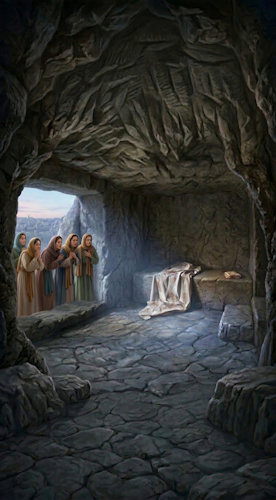
On the first day of the week, early Sunday morning, the women went to the tomb to anoint the body. They found the stone rolled away and the tomb empty. Angels announced: “He is not here: for he is risen, as he said” (Matthew 28:6).
Jesus appeared first to Mary Magdalene, then to the other women, to the disciples on the road to Emmaus, to the ten disciples (Thomas absent), and later to all eleven. He showed them His wounds, ate with them, and commissioned them to preach the gospel to all nations.
The resurrection on Sunday fulfilled the pattern of the firstfruits (Leviticus 23:11). Jesus is the firstfruits of the resurrection. The week that began with the triumphal entry ended with the triumphant resurrection. Death was defeated. The new creation had begun.
The entire week was orchestrated by God. Every detail — the donkey, the cleansing, the betrayal, the trials, the crucifixion on Friday, the silent Sabbath, and the resurrection on Sunday — fulfilled prophecy and accomplished redemption. Jesus entered Jerusalem as King, died as the Passover Lamb, rested in the tomb, and rose as the conqueror of death.
Why Many Believe the Crucifixion Was April 3rd, 33 AD
Many Bible scholars and astronomers conclude the crucifixion occurred on April 3rd, 33 AD, based on several converging lines of evidence: • The Jewish calendar places Nisan 14 (the day of Passover preparation) on Friday, April 3, 33 AD. • A partial lunar eclipse occurred on the evening of April 3, 33 AD, visible from Jerusalem. This matches the prophecy of a blood moon in Joel 2:31 and Peter’s quotation in Acts 2:20. • Pilate’s governorship (26–36 AD) fits perfectly. • John’s mention of the preparation day aligns with a Friday crucifixion before the high Sabbath of Passover week.
This date also aligns with the astronomical conditions for the Passover lamb selection on the previous Sunday (Palm Sunday). The precision of the calendar and the eclipse provide strong historical support for April 3rd as the day Jesus died for the sins of the world.
The Meaning for Us Today
 The final week of Jesus is the climax of redemption. Palm Sunday shows Jesus as King. The cleansing shows Him as Judge. The teaching shows Him as Teacher. The Last Supper shows Him as Covenant Maker. Gethsemane shows Him as Substitute. The trials show Him as the Innocent One. The crucifixion shows Him as the Lamb. The tomb shows Him as the Victor. The resurrection shows Him as the Conqueror.
This week invites us to follow Jesus. It calls us to lay down our lives, take up our cross, and live in the power of the resurrection. The same Jesus who rode into Jerusalem, washed feet, prayed in agony, died on the cross, and rose from the dead is alive today and invites us to know Him personally.
May we never forget the cost of our salvation. The final week was not just history — it is our hope. Jesus finished the work. It is finished. Now we live in the light of the resurrection.