The Fortieth Day and the Forty-First: A Pattern of Waiting and Breakthrough
A Number That Keeps Appearing
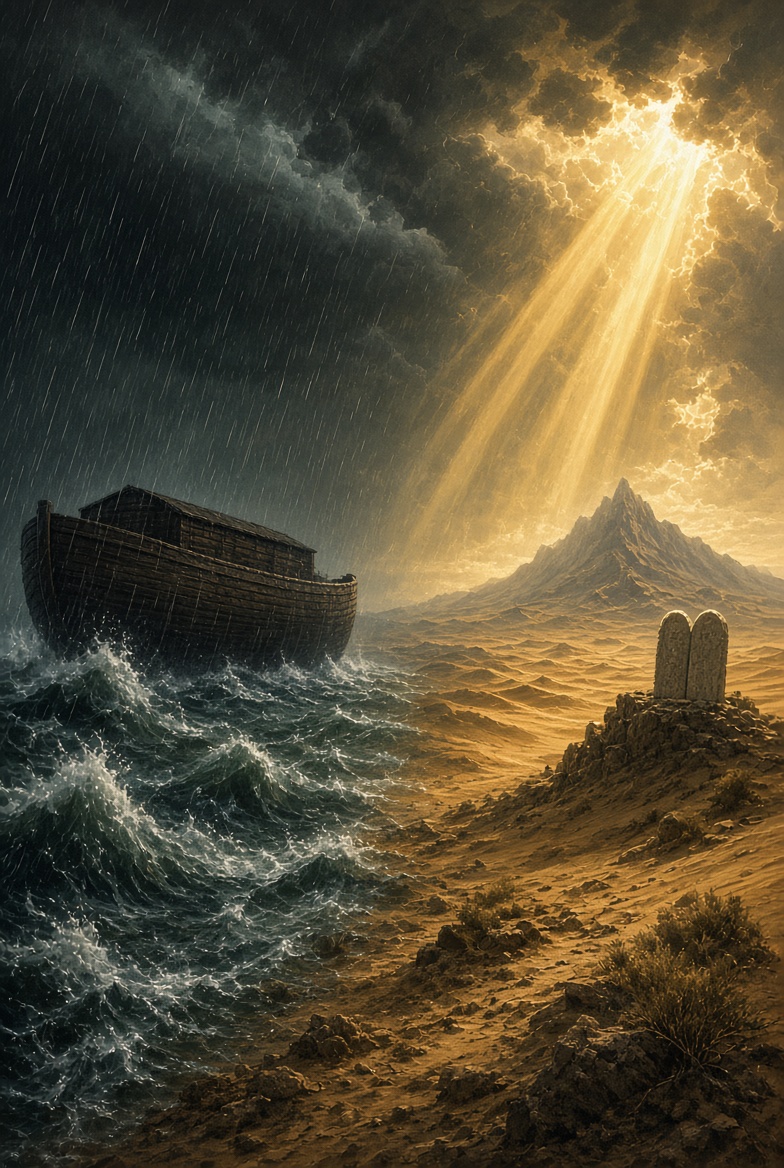 The number forty appears so often in Scripture that it is hard to treat it as coincidence. Rain fell for forty days and forty nights. Moses spent forty years in the desert and forty days on the mountain. Israel wandered forty years. Goliath taunted Israel for forty days. Jonah preached for forty days. Jesus fasted for forty days and, after His resurrection, appeared for forty days before ascending. In case after case, the fortieth period is followed by a decisive change on what can be called the forty-first day or year.
The pattern is not mathematical magic. It is a recurring shape in the way God works with people. A long stretch of testing, waiting, or judgment ends, and something new begins. The fortieth day is the last day of the old chapter. The forty-first is the first day of the next one. Those who quit on the fortieth day never see what comes on the forty-first.
“The rain was on the earth forty days and forty nights.” — Genesis 7:12 (WEB)
Flood, Desert, and Mountain
The flood is the clearest early example. It rained forty days and forty nights (Genesis 7:12 WEB). On the day the rain stopped, the old world was gone and a new one began. The fortieth day closed the judgment. The next day opened the covenant with Noah.
Moses fled Egypt after killing an Egyptian and spent forty years in Midian. Scripture does not give a calendar date for the burning bush, but the pattern holds: after the long desert years, God called him. The years of hiding ended when the call came. Later, Moses went up Sinai and remained forty days and forty nights (Exodus 24:18 WEB). When he came down, he carried the tablets. The waiting on the mountain ended with the giving of the Law. In both cases the fortieth period finished and something decisive arrived.
Israel’s forty years in the wilderness follow the same shape. The generation that refused to enter the land died in the desert. The next generation entered in what can be counted as the forty-first year. The long wandering ended. The promise that had seemed delayed finally opened. Those who endured the fortieth year saw the land. Those who turned back earlier never did.
“Moses entered into the midst of the cloud, and went up on the mountain; and Moses was on the mountain forty days and forty nights.” — Exodus 24:18 (WEB)
Giants, Cities, and the Wilderness Again
Goliath stood and mocked Israel for forty days (1 Samuel 17:16 WEB). On the day David arrived and faced him, the giant fell. Forty days of fear and taunting ended with one stone. The pattern is the same: the long stretch of opposition finished, and the breakthrough came.
Jonah preached, “Yet forty days, and Nineveh shall be overthrown” (Jonah 3:4 WEB). The city repented. God turned from the destruction He had announced. The fortieth day of warning passed into mercy. What had looked like certain judgment became a new beginning because the people responded before the period closed.
These accounts are not identical. One is a flood, one is a giant, one is a city. Yet each uses the same length of time and each ends with a decisive change once that time is complete. The number marks a season that has a limit. It does not last forever. Those who remain through it see what comes after it.
“The Philistine came near morning and evening, and presented himself forty days.” — 1 Samuel 17:16 (WEB)
Jesus, the Forty Days, and the Ascension
 Jesus was led by the Spirit into the wilderness and fasted forty days and forty nights (Matthew 4:2 WEB). When the forty days ended, the tempter came, was resisted, and left. Angels ministered to Him. The period of testing finished. The public ministry began. Once again the fortieth day marked the close of one chapter and the opening of another.
After the resurrection, Jesus presented Himself alive to the apostles for forty days, speaking about the kingdom of God (Acts 1:3 WEB). On the day that period ended, He ascended. The forty days of appearances closed with the command to wait in Jerusalem and the promise of the Spirit. The disciples who stayed through those forty days saw Him leave and then, ten days later, received what He had promised. Those who might have left earlier would have missed both the final teaching and the coming of the Spirit.
The pattern holds from Genesis to Acts. Forty marks a completed season of testing, judgment, or preparation. What follows is not more of the same. It is a new beginning. The rain stops. The giant falls. The land opens. The commandments are given. The city is spared. The tempter flees. The Lord ascends and the Spirit comes. The fortieth day is the last day of waiting. The day after it is the first day of what God does next.
“He was seen by them for forty days, and spoke the things concerning God’s Kingdom.” — Acts 1:3 (WEB)
The Lesson for Those Still Waiting
The repeated pattern does not mean every hard season will last exactly forty days or forty years. It does mean that seasons of testing have an end, and that the end is often the moment just before the change arrives. Many of the biblical examples show people who were still in the middle of the fortieth period when the breakthrough came. Noah was still on the ark when the rain stopped. Israel was still in the wilderness when the land opened. David was still facing the giant on the fortieth day. The disciples were still waiting when Jesus ascended.
The danger is quitting on the fortieth day. The rain feels endless. The giant keeps shouting. The wilderness seems permanent. The temptation feels stronger than the promise. Yet the accounts show that the change often arrives at the close of the period, not in the middle of it. Those who turn back before the fortieth day ends never see the forty-first. Those who remain through it discover that the season was limited all along.
Scripture does not promise that every trial will be short. It does show that God finishes what He starts, and that the long stretches of waiting are not the final word. The flood ended. The desert years ended. The wilderness wandering ended. The giant fell. The city was spared. The tempter left. The Lord ascended. In each case the fortieth period closed and a new reality opened. The pattern invites endurance, not because the waiting is easy, but because the waiting has an end.
Do Not Stop on the Fortieth Day
The short teaching that lists these examples ends with a simple observation: the rain will stop, the giant will fall, and the promised land will open, as long as a person does not give up on the fortieth day. That observation matches the shape of the biblical accounts. The change arrives after the long period, not before it. Endurance through the fortieth day is what positions a person to see the forty-first.
This is not a formula that guarantees a calendar date. It is a pattern that appears often enough to be noticed. God uses extended seasons of testing, judgment, and preparation. Those seasons have limits. When the limit is reached, something new begins. The call is to remain through the season rather than to abandon it just before it closes. The fortieth day feels like the hardest day because it is the last day of the old chapter. The forty-first day is the first day of the next one. Those who stay see both.