The Last Supper: "Is It I, Lord?" – The Heart Revealed in a Single Word
The Shocking Moment at the Table
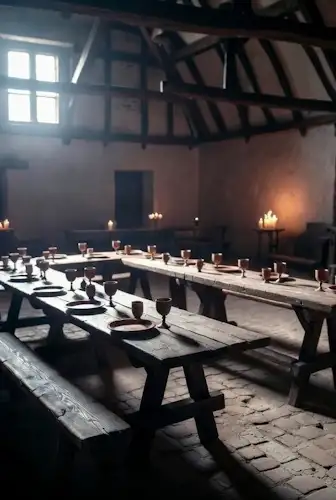 The Last Supper was the final Passover meal Jesus shared with His disciples before the cross. The room was filled with the aroma of roasted lamb, bitter herbs, and unleavened bread. Jesus had already washed their feet, demonstrating servant leadership (John 13:4–5), and now He drops a devastating revelation: "Truly, truly, I say to you, one of you will betray me" (John 13:21). The disciples are stunned. They look at one another in confusion and sorrow, and one by one they begin to ask:
"Lord, is it I?" — Matthew 26:22 (AKJV)
"Rabbi, is it I?" — Matthew 26:25 (AKJV, Judas)
Eleven disciples use the word "Lord" (Greek: Κύριε / Kyrie). Only Judas says "Rabbi." This single word choice exposes everything about their hearts. The question is not just "Who is the traitor?" — it is "Have I betrayed You?" The disciples' immediate self-examination reveals fear, sorrow, and love. Judas' response reveals something far darker.
"Lord" vs. "Rabbi" – A Revelation of Faith
In first-century Jewish culture, "Rabbi" (רַבִּי) was a common, respectful title for a teacher — close and familiar, but not divine. It meant "my master" or "my great one" and was used for respected instructors and leaders. "Lord" (Kyrie), however, went much further: it signified authority, ownership, and often divine lordship (as used in the Septuagint for YHWH). In the mouth of a disciple, it was a confession of submission and recognition that Jesus was more than a teacher — He was their Master, King, and divine Lord.
- The eleven faithful disciples say "Lord" — a confession that Jesus is more than a teacher: He is their Master, their King, their divine Lord. (Matthew 26:22)
- Judas alone says "Rabbi" — a deliberate refusal to acknowledge Jesus' lordship, even in this final, intimate moment. He still sees Jesus only as a human teacher, not as God. (Matthew 26:25)
Jesus answers Judas with quiet, piercing words:
"Thou hast said." — Matthew 26:25 (AKJV)
This is Judas' last chance to repent — but he chooses betrayal. The word "Rabbi" is his final rejection of Jesus' divine identity, even as he eats bread at His table and receives the dipped morsel (John 13:26).
The Table of Grace and the Cost of Betrayal
Jesus' actions at the Last Supper are drenched in grace, even toward Judas. He washes the feet of all twelve disciples — including Judas — demonstrating that no one is beyond the reach of servant love (John 13:5). He hands Judas the dipped bread — a gesture of honor in Jewish culture — saying, "What you are about to do, do quickly" (John 13:27). Even in the moment of betrayal, Jesus gives Judas every opportunity to turn back.
Yet Judas takes the bread and leaves into the night (John 13:30). The contrast is stark: the eleven remain at the table, questioning their own hearts with "Lord, is it I?" Judas exits with "Rabbi" on his lips — refusing to bow, refusing to stay, refusing to repent. The table of grace becomes the table of judgment for the one who rejects it.
This moment echoes throughout Scripture: Jesus offers Himself fully — bread broken, blood poured out — but He will not force allegiance. Judas' choice to call Him "Rabbi" instead of "Lord" is not just a word; it is the final declaration of a heart that never surrendered. The Last Supper reveals the cost of betrayal and the depth of grace that still reaches out.
The Deeper Meaning of the Word Choice
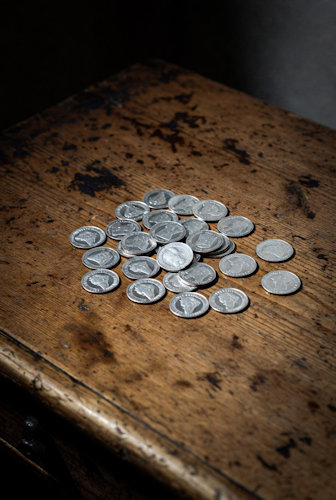 The Gospel writers preserve this small detail to show the condition of the heart:
- Calling Jesus "Lord" is a confession of faith, submission, and recognition of His divine identity. (Romans 10:9; Philippians 2:11)
- Calling Him only "Rabbi" is a rejection — reducing Jesus to a mere teacher, even while sharing bread at His table. Judas had seen the miracles, heard the teaching, walked with Jesus for years — yet he never bowed his heart to call Him Lord.
Jesus knew it all along — yet He washed Judas' feet, broke bread with him, and gave him every opportunity. The Last Supper becomes the ultimate moment of revelation: not just of betrayal, but of the difference between head knowledge and heart surrender. The table is set with grace, but grace can be refused. Judas' "Rabbi" is his tragic last word — a refusal to worship the One who came to save him.
This contrast carries through the rest of Scripture. After the resurrection, Peter — once broken by denial — is restored by Jesus on the shore of Galilee. Three times Jesus asks, "Do you love me?" and three times Peter affirms, "Lord, you know all things; you know that I love you" (John 21:15–17). The word "Lord" becomes Peter's healed confession. What Judas withheld, Peter offers fully — and Jesus commissions him: "Feed my sheep." Grace turns failure into mission.
For us today, the Last Supper challenges our own hearts. When we come to the table — whether in prayer, worship, or communion — what word do we use for Jesus? "Lord" is the confession of surrender; "Rabbi" is the language of distance. The choice is ours each day: will we call Him Master and King, or merely teacher? The answer determines whether we remain at the table or walk out into the night.