The Same Garment, the Same Call: John the Baptist and Elijah
A Detail Hidden in Plain Sight
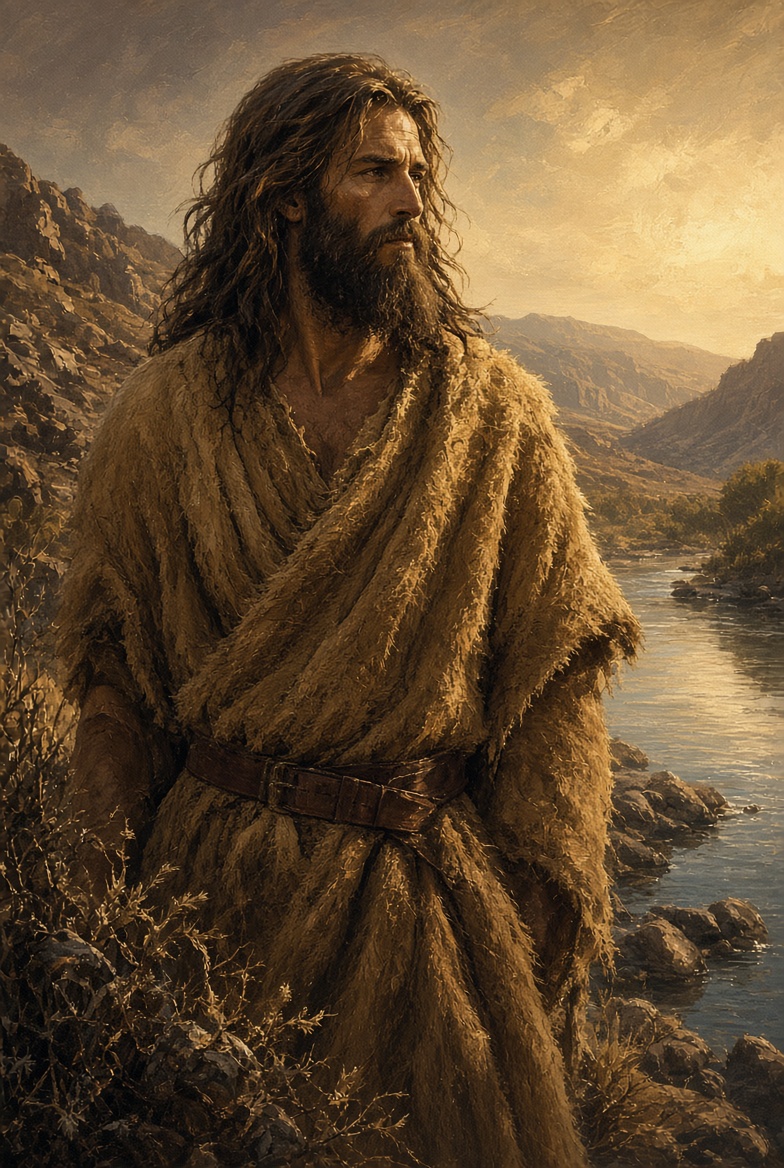 When the Gospels introduce John the Baptist they pause to describe what he wore. “Now John himself wore clothing made of camel’s hair, with a leather belt around his waist. His food was locusts and wild honey” (Matthew 3:4 WEB). The detail can seem like a simple note about a wilderness preacher. It is more. The same description appears centuries earlier for the prophet Elijah. In 2 Kings 1 messengers return to King Ahaziah and report a man they met. The king asks what the man looked like. They answer, “He was a hairy man, and wore a leather belt around his waist.” Ahaziah knows at once: “It is Elijah the Tishbite” (2 Kings 1:8 WEB).
Matthew and Mark place the two descriptions side by side on purpose. John appears in the same rough garment and leather belt that marked Elijah. The clothing is not fashion. It is a signal. Anyone who knew the Scriptures would recognize the connection. The forerunner had arrived, and he was dressed like the prophet who was promised to come before the Day of the Lord.
“He was a hairy man, and wore a leather belt around his waist. He said, ‘It is Elijah the Tishbite.’” — 2 Kings 1:8 (WEB)
The Promise in Malachi
The last verses of the Old Testament look forward to a day of judgment and restoration. “Behold, I will send you Elijah the prophet before the great and terrible day of the Lord comes. He will turn the hearts of the fathers to the children, and the hearts of the children to their fathers, lest I come and strike the earth with a curse” (Malachi 4:5 WEB). For four hundred years the people waited. When John appears in the wilderness calling people to repent, the clothing he wears is the first public sign that the waiting is over.
The angel who announced John’s birth said the same thing in advance. John would go before the Lord “in the spirit and power of Elijah, to turn the hearts of the fathers to the children, and the disobedient to the wisdom of the just; to make ready a people prepared for the Lord” (Luke 1:17 WEB). He is not Elijah returned in the flesh. He comes in the same spirit and power, carrying the same call to turn hearts back to God.
Jesus later confirms the identification. When the disciples ask about the coming of Elijah, Jesus answers that Elijah has already come, and they understand He is speaking of John the Baptist (Matthew 17:12 WEB). In another place He says, “If you are willing to receive it, this is Elijah, who is to come” (Matthew 11:14 WEB). The clothing, the message, and the timing all line up.
“Behold, I will send you Elijah the prophet before the great and terrible day of the Lord comes.” — Malachi 4:5 (WEB)
The Scene in 2 Kings 1
The story that supplies the clothing detail is short and sharp. King Ahaziah falls and is injured. Instead of seeking the Lord he sends messengers to inquire of Baal Zebub, the god of Ekron. The angel of the Lord sends Elijah to intercept them. Elijah delivers the word: because the king has turned to a false god, he will die. When the messengers return and describe the man who stopped them, Ahaziah recognizes Elijah at once from the garment of hair and the leather belt.
Elijah is the prophet who confronts a king who looks for answers anywhere except the living God. He stands alone, dressed in the rough clothing of a wilderness man, and speaks judgment. The same pattern appears when John the Baptist confronts Herod. John rebukes the king for taking his brother’s wife. Herod is troubled, yet he keeps John in prison and eventually has him killed. Both prophets speak truth to power. Both are hated for it. Both refuse to soften the message.
The connection is not limited to clothing. Elijah calls Israel to decide between the Lord and Baal. John calls the people to repent because the kingdom of heaven is at hand. Both stand in the wilderness. Both prepare the way for what comes next. Elijah’s ministry ends with a crossing of the Jordan before he is taken up. John’s ministry centers on the Jordan, where he baptizes and where Jesus begins His public work. The geography itself echoes.
“Now John himself wore clothing made of camel’s hair, with a leather belt around his waist.” — Matthew 3:4 (WEB)
In the Spirit and Power of Elijah
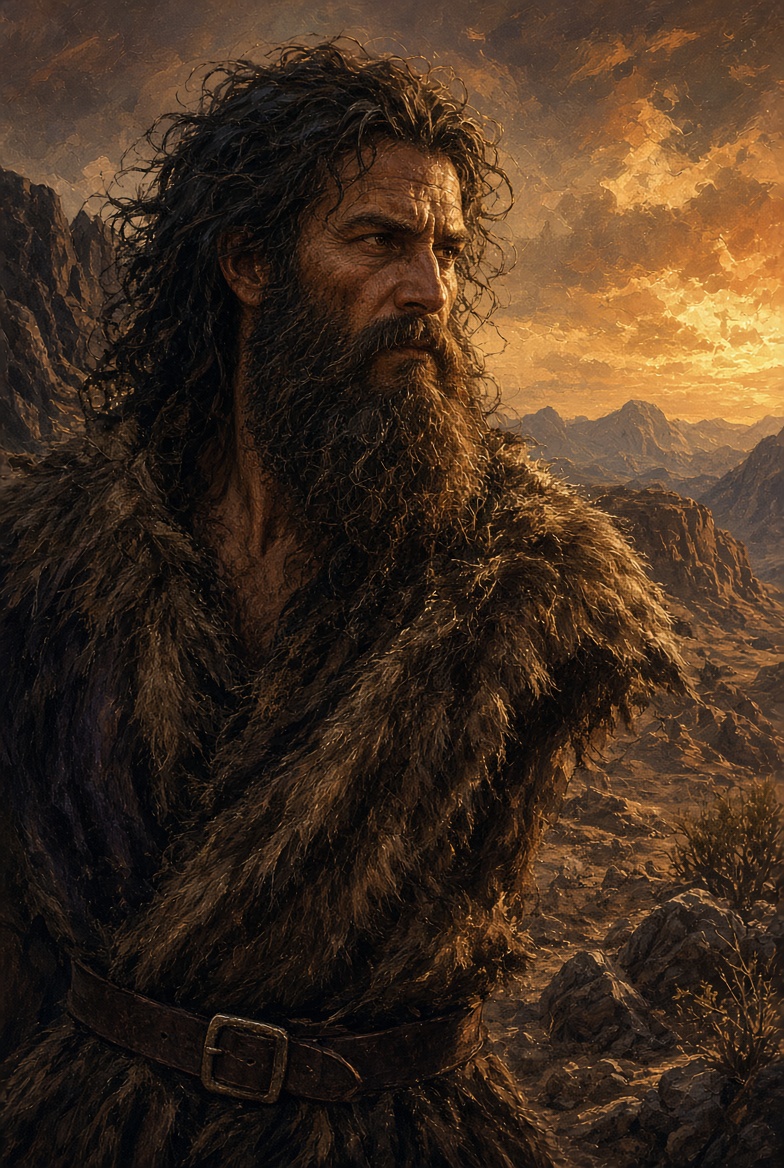 John himself denied that he was Elijah when the religious leaders asked him directly (John 1:21 WEB). He was right. He was not the same man who had been taken up in the whirlwind. Jesus, however, was also right. John came in the spirit and power of Elijah. The two statements fit together once the difference between identity and office is clear. Elijah’s office was to call a generation back to the Lord and to prepare the way. John filled that office for the coming of the Messiah.
The clothing makes the point visible. No other prophet is described with a garment of hair and a leather belt in quite the same way. When Matthew and Mark include the detail they are not adding color. They are pointing to 2 Kings 1 so that readers will make the connection. The forerunner has arrived. The one who prepares the way is standing in the wilderness, dressed as Elijah was dressed, calling people to repent.
This is why the Gospels spend time on what John wore and what he ate. The details are part of the identification. Locusts and wild honey keep him free from ordinary comforts. The camel hair and leather belt mark him as the prophet who was promised. Together they show that the long silence after Malachi has ended. The messenger has come, and the greater One is about to appear.
“He will go before him in the spirit and power of Elijah, to turn the hearts of the fathers to the children.” — Luke 1:17 (WEB)
Why the Connection Matters
The link between John and Elijah is not a curiosity. It shows that God keeps His word across centuries. The last promise of the Old Testament finds its fulfillment in the first public figure of the New. The same God who sent Elijah to confront a king who sought answers from a false god now sends John to prepare a people for the true King. The clothing is the visible thread that ties the two together.
It also clarifies what kind of preparation the Messiah requires. Both men call for repentance. Both refuse to flatter power. Both live simply so that nothing distracts from the message. John does not soften the call. He does not dress like the religious leaders of his day. He appears as Elijah appeared, so that anyone with eyes to see will know the time has come.
Jesus receives that preparation and then surpasses it. John baptizes with water. The One who comes after him baptizes with the Holy Spirit and fire. John points away from himself. “He must increase, but I must decrease.” The forerunner’s work is finished when the greater One steps forward. The garment of hair and the leather belt have done their work. They have marked the messenger. Now the Messiah stands in the Jordan and the new chapter begins.
The Forerunner and the One Who Follows
The detail in 2 Kings 1 is easy to pass over. A king asks what a prophet looked like, and the answer is a garment of hair and a leather belt. Centuries later the same description appears for John. The repetition is deliberate. Scripture uses the clothing to say that the promised Elijah has come in the person of John the Baptist, not as a reincarnation but in the same spirit and power.
John prepares the way. He calls for repentance. He confronts a king. He stands in the wilderness dressed as the earlier prophet was dressed. Then he steps aside. The One he pointed to is greater. The connection between the two men is one more way the Bible shows that God finishes what He starts. The last word of the Old Testament is not left hanging. The forerunner arrives, the Messiah appears, and the long promised day begins to unfold.