The Sons of Thunder: Ambition, Rebuke, and the True Cost of Greatness
The Sons of Thunder: Who Were They?
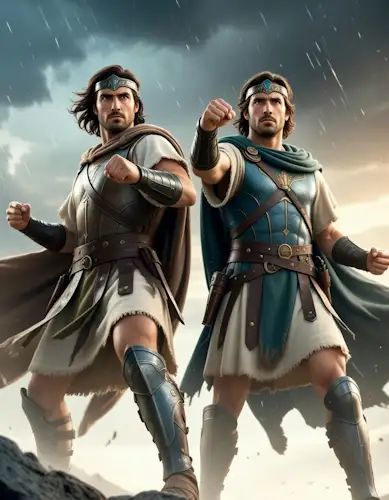 James and John were two of Jesus' closest disciples, brothers and sons of Zebedee, a fisherman from Galilee. Jesus nicknamed them "Boanerges," which means "Sons of Thunder" (Mark 3:17). This name likely reflected their bold, fiery personalities. They were passionate, quick to act, and sometimes impulsive. As part of Jesus' inner circle (with Peter), they witnessed key moments like the Transfiguration (Mark 9:2–8) and the raising of Jairus' daughter (Mark 5:37–43).
John would later become known as the "disciple whom Jesus loved" and author of the Gospel of John, three letters, and Revelation. James was the first apostle martyred (Acts 12:2). But their story includes a moment of raw ambition driven by their mother, leading to a profound rebuke from Jesus—and ultimately, a lesson learned at the cross.
"And James and John, the sons of Zebedee, come unto him, saying, Master, we would that thou shouldest do for us whatsoever we shall desire." — Mark 10:35 (AKJV)
The Mother's Bold Request
In Matthew's account, it is the mother of James and John—likely Salome, who was possibly Mary's sister (John 19:25; Mark 15:40)—who approaches Jesus with the request. She kneels before Him and asks, "Grant that these my two sons may sit, the one on thy right hand, and the other on the left, in thy kingdom" (Matthew 20:21).
Mark's version has the brothers making the request directly (Mark 10:35–37), but both accounts show the ambition. In first-century Jewish culture, sitting at the right and left of a king meant positions of highest honor and power. The mother (and sons) assumed Jesus' kingdom would be earthly and immediate—a political overthrow of Rome. They wanted VIP seats in the new regime. But they didn't know what they were asking.
Jesus' Rebuke: "Ye Know Not What Ye Ask"
Jesus responds gently but firmly: "Ye know not what ye ask. Are ye able to drink of the cup that I shall drink of?" (Matthew 20:22). The "cup" symbolized suffering and death—the path to the cross. James and John boldly reply, "We are able." Jesus affirms they will indeed share in His suffering: James would be martyred by Herod (Acts 12:2), and John would endure exile and persecution (Revelation 1:9).
But Jesus adds, "To sit on my right hand, and on my left, is not mine to give, but it shall be given to them for whom it is prepared of my Father" (Matthew 20:23). Positions in the kingdom are not about favoritism or ambition; they are assigned by God based on faithfulness through suffering. The other disciples are indignant, but Jesus uses the moment to teach that true greatness comes from serving, not ruling (Matthew 20:25–28).
"But Jesus answered and said, Ye know not what ye ask. Are ye able to drink of the cup that I drink of? and to be baptized with the baptism that I am baptized with?" — Matthew 20:22 (AKJV)
The Cross: What It Really Takes
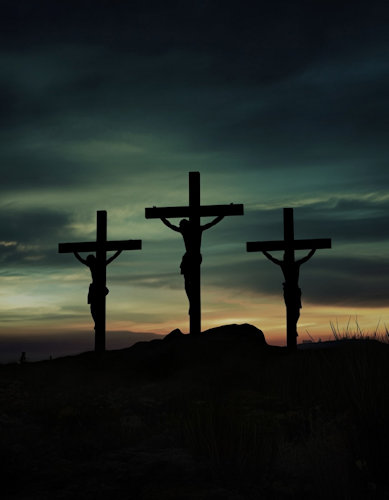 Fast forward to the crucifixion. At the cross, two thieves are crucified—one on Jesus' right, one on His left (Luke 23:39–43). Instead of honored seats, they are positions of shame and suffering. Salome is there, watching (Matthew 27:56). She sees her "King" enthroned not in glory, but in agony. The left and right are occupied by criminals, not her sons.
This is what she didn't know she was asking: the path to glory is through the cross. Jesus' kingdom is not of this world (John 18:36). True honor comes through humility, service, and suffering for others. Salome's request for power is answered with a revelation of sacrifice. At the cross, she learns the true cost of greatness.
Lessons for Us Today
The story of the Sons of Thunder and their mother offers timeless truths:
- Ambition must be submitted to God: Like James and John, we may seek greatness, but God assigns roles based on His plan, not our pushiness.
- We often don't know what we ask: Our prayers for blessing may lead through suffering. God knows the full picture.
- Greatness is in serving: Jesus said, "The Son of Man came not to be served but to serve, and to give his life as a ransom for many" (Matthew 20:28). Follow His example.
- The cross redefines everything: What looks like defeat is victory. The left and right are for the humble, not the ambitious.
- God redeems our failures: The "Sons of Thunder" became pillars of the church. God uses even our misguided zeal.
Like Salome at the cross, may we see that true greatness is found in the shadow of Calvary—not in power, but in sacrifice.