The Stone Was Rolled Away – Not for Jesus to Leave, But for Us to See and Believe
The Empty Tomb and the Rolled-Away Stone
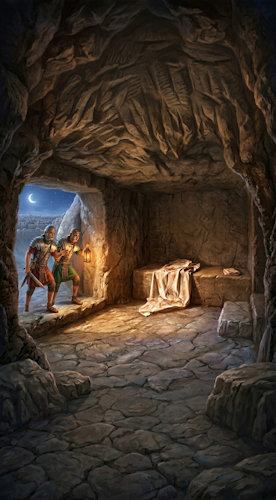 When the women arrived at the tomb early on Sunday morning, they found something astonishing: the massive stone that had sealed the entrance had been rolled away. The Gospels record this detail with precision: “And they found the stone rolled away from the sepulchre” (Luke 24:2). This was not a small pebble — it was a large, heavy disk of stone, likely weighing several tons, designed to prevent anyone from entering or leaving the tomb.
Many people assume the stone was rolled away so Jesus could physically exit the tomb. But that assumption misses the deeper truth of the resurrection. Jesus had already risen. His glorified body was no longer bound by physical limitations. Later that same day, when the disciples were gathered together with the doors shut and locked for fear of the Jews, Jesus suddenly appeared among them: “Then the same day at evening… came Jesus and stood in the midst, and saith unto them, Peace be unto you” (John 20:19). He passed through solid walls and a locked door without any hindrance. If Jesus could enter a locked room without opening the door, He certainly did not need the stone rolled away in order to leave the tomb.
The stone was rolled away for an entirely different reason — so that everyone could see and know the truth. The empty tomb was not hidden; it was put on public display. The massive stone was moved so the women, the disciples, the Roman guards, and ultimately the whole world could look inside and see that the tomb was empty. The resurrection was never meant to be a secret. It was meant to be proclaimed.
This is one of the most powerful and often-overlooked details of the resurrection story. The stone was not moved for Jesus’ benefit — it was moved for ours. It was rolled away so that doubt could be replaced with faith, fear could be replaced with courage, and death could be replaced with life. The open tomb became the first visual evidence that Jesus had conquered death.
“And they found the stone rolled away from the sepulchre.” — Luke 24:2 (AKJV)
The Physical Reality of the Stone and the Tomb
To understand why the stone was rolled away, we must first understand the physical reality of a first-century Jewish tomb. The tomb of Joseph of Arimathea was a rock-cut sepulchre, typical of wealthy families. A large, circular stone — often weighing between one and two tons — was rolled along a groove in front of the entrance to seal it. Once in place, the stone was extremely difficult to move. Roman soldiers were stationed to guard it, and an official Roman seal was placed across the stone to make tampering a capital offense.
The women who came to the tomb early Sunday morning were not expecting to find it open. They had brought spices to anoint the body and were worried about how they would move the stone: “Who shall roll us away the stone from the door of the sepulchre?” (Mark 16:3). When they arrived, the stone was already rolled away — and not just partially moved. It was completely removed from the groove and lying flat on the ground, far enough away that the tomb entrance was fully exposed.
This was no small feat. A stone of that size and weight would have required several strong men working together with levers to move it even a short distance. Yet when the women arrived, it had been rolled away with ease. The Roman guards were terrified and later reported the event to the chief priests, who bribed them to say the disciples had stolen the body while they slept (Matthew 28:11–15). The fact that the stone was completely removed shows that something supernatural had occurred — but not to help Jesus escape. He had already risen. The stone was moved for the benefit of those who would come to see the empty tomb.
Jesus’ Glorified Body and the Locked Door
Later that same day, Jesus appeared to the disciples in a locked room. John records: “Then the same day at evening, being the first day of the week, when the doors were shut where the disciples were assembled for fear of the Jews, came Jesus and stood in the midst, and saith unto them, Peace be unto you” (John 20:19). The doors were shut and locked, yet Jesus entered without opening them. This proves that His resurrected body was no longer limited by physical barriers. He could pass through solid matter.
This event is the clearest evidence that the stone did not need to be rolled away for Jesus to leave the tomb. If He could walk through locked doors, He could certainly pass through solid rock. The stone was not moved to let Him out — it was moved to let the world in. The open tomb was an invitation to investigate, to see the empty grave clothes, to witness the reality of the resurrection.
The women, Peter, John, and eventually the rest of the disciples all saw the empty tomb because the stone had been rolled away. The Roman guards saw it. The religious leaders heard about it. The truth was put on public display. The resurrection was never intended to be a private event — it was meant to be proclaimed to the entire world.
The Stone Rolled Away for the World to Know the Truth
The stone was rolled away so that everyone could know the truth. The resurrection was not hidden in darkness — it was revealed in the light of day. The open tomb became the first piece of evidence that death had been defeated. The grave clothes were left neatly folded, showing that Jesus had not been stolen or hastily removed. The stone was moved so that doubt could be replaced with faith.
This is one of the most powerful details in the resurrection story. The stone was not moved for Jesus’ convenience — it was moved for ours. It was rolled away so that the women could see the empty tomb and run to tell the disciples. It was rolled away so Peter and John could run to the tomb and see the grave clothes for themselves. It was rolled away so that the Roman guards could witness the event and later be bribed to lie about it — proving the tomb was indeed empty. It was rolled away so that the truth of the resurrection could be examined and verified.
The resurrection is the cornerstone of the Christian faith. Without it, our preaching is useless and our faith is futile (1 Corinthians 15:14). The stone was rolled away so that the world could see the evidence and believe. The empty tomb is God’s invitation to investigate and to trust in the risen Christ.
The Meaning for Us Today
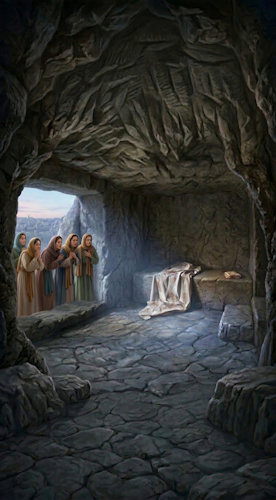 The stone was rolled away for us. It was not moved so Jesus could escape the tomb — He had already risen. It was moved so that we could look inside and see the truth. The open tomb is God’s declaration that death has been defeated, sin has been paid for, and new life is available to all who believe.
Today, the same invitation stands. The stone is still rolled away. The tomb is still empty. The risen Christ is still calling us to come and see. The resurrection is not a myth or a legend — it is the central fact of history. The stone was rolled away so that the truth could be known, proclaimed, and believed.
May we never lose the wonder of that open tomb. The stone was rolled away for you and for me — so that we could know the truth and have eternal life in the name of the risen Lord.