The Tersorium in the Context of Jesus' Crucifixion: A Historical and Theological Exploration
Definition of Tersorium
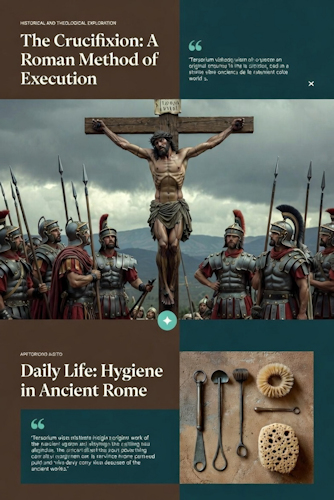 The tersorium (also known as xylospongium, from Greek xylon meaning "wood" and spongos meaning "sponge") was an ancient Roman hygiene tool consisting of a sea sponge attached to a wooden stick. It was primarily used in public latrines for personal cleaning after defecation, functioning like primitive toilet paper or a bidet. After use, it was typically rinsed in a channel of running water, vinegar, or saltwater for antibacterial purposes and often shared communally. Ancient sources, such as Roman philosopher Seneca (in his Epistles 70.20–21, describing a gladiator's suicide by shoving one down his throat) and poet Martial (in Epigrams 12.48, mocking it as a "wretched sponge on a godforsaken stick"), highlight its association with filth and everyday Roman life. Archaeological evidence, including sponge remnants found in Roman sewers and graffiti from sites like Pompeii, confirms its widespread use in military camps, public baths, and households.
While primarily a latrine tool, sponges in general had versatile applications in Roman culture, such as for bathing, medical purposes (e.g., absorbing fluids), or cleaning messes. In the context of executions like crucifixions, it could be repurposed for wiping down victims or equipment, given the messy nature of such events.
"They gave me also gall for my meat; and in my thirst they gave me vinegar to drink." — Psalm 69:21 (AKJV)
Evidence and Arguments in Favor of Its Use in Jesus' Crucifixion
The theory that the "sponge" offered to Jesus during his crucifixion (described in all four Gospels: Matthew 27:48, Mark 15:36, Luke 23:36, John 19:29) was a tersorium gains traction from historical, textual, and cultural evidence. This interpretation posits that Roman soldiers, known for inventive cruelty, used this filthy tool to deliver sour wine (posca or vinegar), adding scatological humiliation to the already profound degradation. Key supporting points include:
- Historical Roman Practices and Tools: Roman soldiers carried personal hygiene kits, including tersoria, especially in field duties like executions. Crucifixion sites were often chaotic and unsanitary, with victims experiencing involuntary bodily functions (e.g., defecation due to trauma and shock). Soldiers would use available tools for cleanup—wiping blood, excrement, or sweat from the body or cross to maintain order or prepare for reuse. Posca (a cheap vinegar-wine mix) was a standard soldier drink, and tersoria were routinely rinsed in similar vinegar solutions, making it a "convenient" item to soak and extend to a victim's mouth.
- Gospel Descriptions Align with the Tool: The texts describe a "sponge" soaked in vinegar and placed on a "reed" or "hyssop stalk" (a 2–3 foot stick), lifted to Jesus' lips. This matches the tersorium's design exactly—a pre-made sponge-on-a-stick combo. Roman crosses were often low to the ground (crux humilis), so a long stick wasn't necessary for reach unless it was already part of the tool. The act occurs amid mockery (e.g., soldiers taunting "save yourself" in Luke 23:36), suggesting intent to degrade rather than mercifully quench thirst.
- Distinction Between Two Drink Offerings: The Gospels mention two instances—a refused offering of wine mixed with gall/myrrh (Matthew 27:34; Mark 15:23, possibly a painkiller with a bitter, fecal-like taste if delivered via tersorium) and an accepted one of plain vinegar near death. Proponents argue the first could be the contaminated tool, refused by Jesus to endure full suffering, while the second fulfills prophecy spitefully.
- Ancient Sources and Cultural Associations: References like Seneca's gladiator story emphasize the tersorium's repulsive connotations, fitting Roman execution tactics that amplified psychological torment (e.g., crown of thorns, spitting). No direct ancient link ties it to crucifixions, but the tool's ubiquity in military life makes it plausible. Scholar Benjamin J. Rusch's 2023 article in the Global Journal of Classical Theology synthesizes this, proposing it resolves exegetical puzzles in the Gospels by adding layers of irony and insult.
- Prophetic Fulfillment with Irony: The vinegar ties to Psalm 69:21 ("they gave me vinegar for my thirst"), but using a tersorium elevates the humiliation—enemies unwittingly complete Scripture in the basest way, underscoring Jesus' total submission.
Why This Theory Holds Weight: Reasons and Implications
The tersorium theory isn't mainstream (traditional views see the sponge as a simple, possibly merciful tool), but it's compelling due to Roman sadism and the crucifixion's design for maximum shame. Reasons supporting it include:
- Roman Cruelty and Improvisation: Soldiers were trained to dehumanize victims; offering a latrine tool to a dying "king" fits patterns of mockery (e.g., the titulus "King of the Jews"). With no dedicated "cup" likely available at Golgotha, a tersorium—quick, absorbent, and vile—would be the "easiest" choice for a soldier responding to Jesus' cry of thirst (John 19:28).
- Context of Nudity and Bodily Horror: Victims were stripped naked, amplifying vulnerability. Trauma often caused loss of bowels, creating messes that soldiers cleaned with on-hand tools like tersoria. This makes the item "on site" and repurposable, turning a hygiene necessity into torment.
- Euphemism in Gospel Writing: As discussed, the authors "cleaned up" details to focus on theology. Audiences familiar with thousands of crucifixions would instantly recognize the subtext of "sponge on a reed"—evoking the tersorium's filth without explicit mention, much like modern euphemisms avoid graphic descriptions. This kept the narrative accessible and redemptive, avoiding revulsion that might overshadow messages like forgiveness ("they know not what they do," Luke 23:34) or sovereignty ("It is finished").
- Deeper Theological Insight: If true, it deepens the cross's shame—Jesus absorbing ultimate degradation (physical, spiritual, scatological)—highlighting divine love amid horror. It reminds us Scripture layers meaning for "those in the know," making modern discoveries profound.
 The Gospel authors, writing for audiences who lived under Roman rule, didn't need to spell out every gruesome or culturally implicit detail because their readers were immersed in that world. Crucifixions were a public spectacle of terror, as Josephus and other sources describe, with thousands executed during rebellions or routine punishments (e.g., after the Spartacus revolt or in Judea under procurators like Pilate). People saw the nakedness, the bodily breakdowns, the improvised tools of torment— including the everyday items like a tersorium that soldiers carried or had on hand for hygiene and cleanup. Describing it simply as a "sponge" (Greek: spongos) on a "reed" or "hyssop" (kalamos/hyssopos) would evoke the full, repulsive context without needing to belabor it, much like how we might say "he was waterboarded" today without detailing the mechanics, knowing the audience gets the horror.
This euphemistic style keeps the focus on the theological punch: Jesus' thirst fulfilling Psalm 69:21, his sovereignty in saying "It is finished" (John 19:30), and the irony of enemies unwittingly completing prophecy. If they had gone graphic, it might have overshadowed the redemptive message or turned off early converts. It's a reminder that Scripture often layers meaning for those "in the know," making these discoveries—like the potential tersorium subtext—even more profound when we dig in.